What Is Elocution? A Complete Guide for Modern Speakers and Creators
 Lauren Mercer · July 30, 2026 · 7 min read
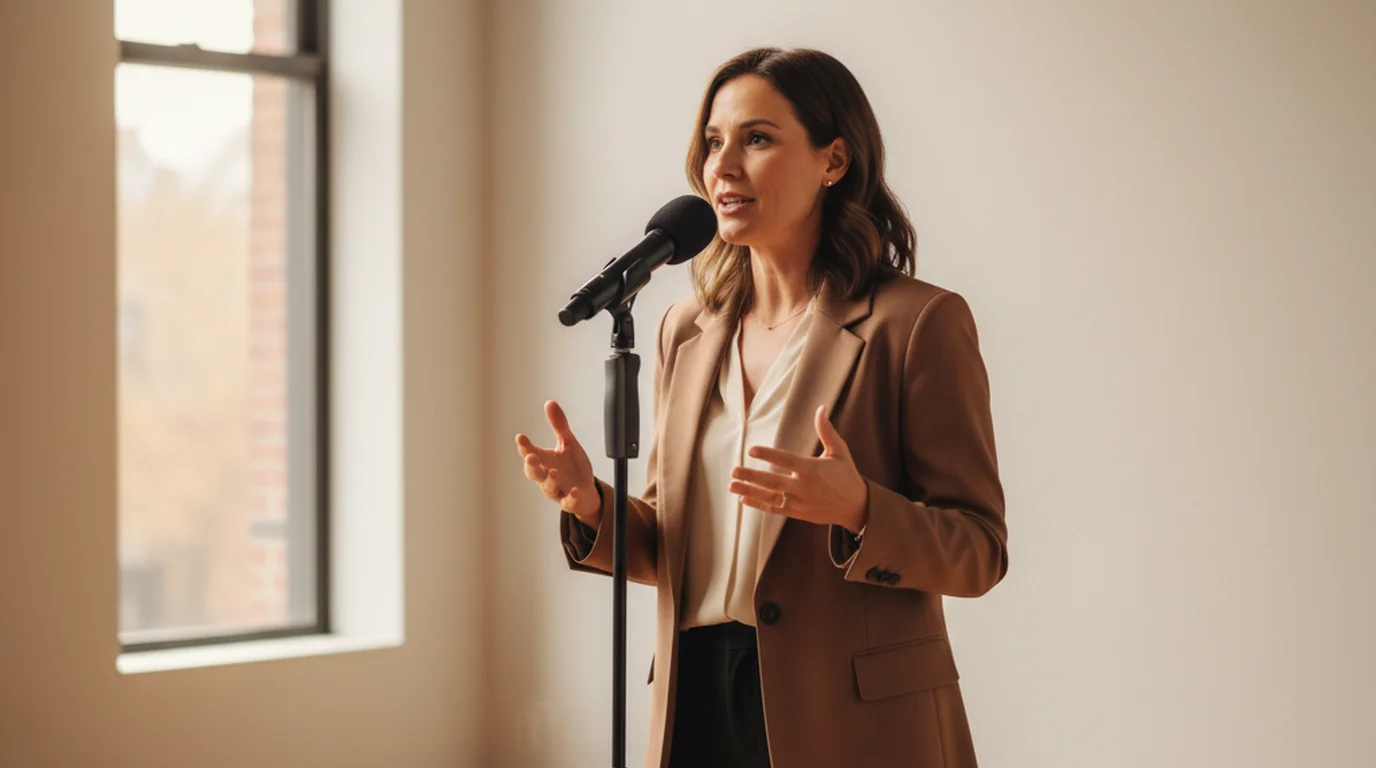
I've taught video communication to more than 10,000 students, and the question that keeps coming back in every cohort is some version of this: why does my delivery feel flat even when my content is solid? The answer, almost every time, is elocution — or the absence of it. Most people were never formally taught how to use their voice as a tool. They focused on what to say and hoped the how would sort itself out. It doesn't. Elocution is the discipline that fills that gap, and it matters just as much for a course video as it does for a keynote address.
Elocution is the art and practice of clear, expressive speech delivery. It covers diction (precise pronunciation of words and sounds), articulation (the physical shaping of consonants and vowels), pace, pitch, pause, and vocal presence. The term comes from the Latin elocutio, which in classical rhetoric described the style and delivery of a spoken argument. Today it refers to the full skill set that makes spoken communication clear, confident, and compelling.
The components of elocution: what it actually covers
Elocution is not a single skill — it's a cluster of related techniques that work together. Understanding the individual components makes it much easier to know where to focus your practice.
Diction is the most commonly cited element. It means choosing words precisely and pronouncing them clearly. In speech, poor diction shows up as dropped consonants (sayin' instead of saying), swallowed endings (wan' instead of want), or muffled vowels. Strong diction doesn't mean an affected accent — it means every word is audible and distinct at a normal speaking pace.
Articulation refers to the physical mechanics of sound production — how your tongue, lips, jaw, and soft palate work together to form phonemes. Articulation problems are often habitual: a speaker who mumbles has trained their mouth to do the minimum work, and targeted drills (tongue twisters, over-exaggerated slow reading) retrain those muscle patterns. In my course module on vocal delivery, I spend an entire week on articulation alone because it's the single fastest way to improve perceived confidence on camera.
Pace and pause are where most video creators struggle. The instinct when nervous is to speed up, which compresses meaning and gives listeners no time to absorb key points. Deliberate pace control — including intentional silence — is a core elocution skill. A two-second pause before an important phrase does more work than five additional words of explanation.
Pitch and volume complete the picture. A monotone delivery, even with perfect diction, loses listeners within 90 seconds. Varied pitch signals emphasis and emotion. Volume awareness — knowing when to project and when to pull back — is what separates a speaker with vocal presence from one who is simply audible.
According to research published in the Journal of Speech, Language, and Hearing Research, listeners judge speaker credibility within the first 30 seconds based primarily on vocal clarity and pace — not content. Speakers who use deliberate pausing and clear articulation are rated as significantly more authoritative than those who rush, regardless of the information being conveyed.
Elocution meaning in historical context — and why it still applies
The classical tradition of oratory placed elocution as one of the five canons of rhetoric, alongside invention, arrangement, memory, and delivery. An orator in ancient Greece or Rome was expected to master all five. Elocution specifically covered the style and linguistic choices that made an argument land — it was the bridge between what you thought and how you said it.
By the 18th and 19th centuries, elocution had become a formal discipline taught at schools across Britain and America. Elocution teachers trained actors, clergy, politicians, and anyone else whose livelihood depended on being heard clearly. The focus shifted toward systematic vocal training: breathing exercises, articulation drills, pitch exercises. The Delsarte System, developed by François Delsarte in the 1800s, linked body posture and gesture to vocal expression in a way that influenced theatrical training well into the 20th century.
What changed in the modern era is not the relevance of elocution but its context. The rise of broadcast media in the 1920s and 1930s created new standards for vocal clarity. Radio announcers had to communicate without body language; every nuance had to live in the voice. TV added visual dimension but kept the premium on clear, controlled speech. Today, online course creators, podcast hosts, YouTube educators, and remote professionals face the same challenge: your voice is doing most of the work, and it needs to be trained for that job.
Elocution versus public speaking skills: how they relate
People often use "elocution" and "public speaking skills" interchangeably, but they describe different layers of the same discipline. Public speaking is the broader category — it covers everything from structuring an argument and managing anxiety to reading a room and fielding questions. Elocution is specifically about vocal and linguistic delivery: the how of speaking, not the what or why.
You can have strong public speaking skills — good material, confident body language, solid structure — and still undermine them with weak elocution. Mumbled endings, rushed transitions, and monotone delivery work against everything else you've built. Conversely, an orator with exceptional elocution but thin content will hold attention through delivery alone, at least for a while.
The combination is what produces lasting impact. In my experience teaching video communication, the students who improve fastest are the ones who treat their script as training material for elocution — not just content to read. They use each recording session to practice a specific element: one session for pace, one for pause placement, one for pitch variation. That targeted approach produces measurable results within four to six weeks.
The National Communication Association lists oral communication as a top-five professional competency in every workforce survey it has published since 2018. Among the specific sub-skills, vocal clarity and organized delivery consistently rank above content knowledge as predictors of perceived competence in professional settings. Elocution training directly addresses both.
How elocution applies to video and online content creation
If you're creating course videos, YouTube content, or scripted presentations, elocution is your production value. A well-lit video with crisp audio and muddy delivery still underperforms a simpler video where the speaker is clear, paced, and expressive. I've reviewed hundreds of student recordings across my cohorts, and the pattern is consistent: delivery quality determines whether viewers finish the video, not production quality.
The specific elocution challenges that show up in video content are different from live speaking. You're often reading from a script, which introduces its own risks: the "reading voice" — flat affect, unnatural phrasing, dropped eye contact — that makes scripted content feel robotic. The solution is not to memorize everything but to use a tool that keeps your eyes at camera level while you read. When I record scripted content, I use a teleprompter to maintain eye contact throughout. The free online teleprompter works in any browser for desktop recording; for iPhone or iPad camera setups, the overlay mode keeps your script right in the camera view.
The second video-specific challenge is pacing on playback. Live audiences give you feedback — laughter, silence, body language shifts — that helps you calibrate in real time. Video removes all of that. You have to internalize elocution principles well enough to self-regulate without external cues. That's why I recommend recording 90-second rehearsal clips, playing them back at 1x speed, and marking every moment where you'd lose a live audience. Three to five rounds of this kind of deliberate practice produces the self-awareness most speakers don't develop until years of stage experience.
Practical elocution exercises for adult learners
The most effective elocution exercises are not complicated, but they require consistency. Here's the framework I use with my students — all of it doable without a teacher or special equipment.
Articulation warm-up (5 minutes daily). Read a tongue twister slowly enough that every consonant is distinct, then increase speed while maintaining clarity. "Red leather, yellow leather" and "unique New York" are both excellent because they target different articulation patterns. Do three rounds of each, starting at 60% of your comfortable speed and building up.
Pace mapping (10 minutes, 3x per week). Read a paragraph aloud and mark it with a pencil — a single slash where you want a half-beat pause, a double slash for a full beat. Then read it again with those pauses in place. Most people discover they were rushing through transitions that deserve space. This exercise builds conscious pace control faster than any other method I've tried across my courses.
Pitch variation drill (5 minutes daily). Read a single sentence five times in a row, placing emphasis on a different word each time. "I've never seen anything like this" versus "I've never seen anything like this." Notice how meaning shifts with emphasis. This builds the muscle memory for intentional pitch variation during actual delivery.
For a deeper set of exercises structured around video performance specifically, the elocution exercises for adults guide covers 12 targeted drills with practice scripts you can use directly in your teleprompter setup. If the goal is narrower — being asked to repeat yourself less often — our guide to how to speak more clearly works backwards from the four habits that cause unclear speech.
Frequently Asked Questions
What is an example of elocution?
A practical example of elocution is a trained newscaster who reads a complex script at 160 words per minute with perfect diction, varied pitch, and zero filler words. Another example is a stage actor projecting their voice to the back row without a microphone while keeping every consonant crisp and every vowel full. At a smaller scale, any speaker who slows down deliberately to land a key word — rather than rushing through it — is applying elocution technique.
What is a synonym for elocution?
Common synonyms for elocution include oratory, rhetoric, diction, articulation, and speech delivery. Oratory and rhetoric both carry a classical tradition of persuasive public speaking. Diction refers more narrowly to word choice and pronunciation clarity. Articulation describes the physical production of individual sounds. In everyday use, people often say "public speaking skills" or "vocal presence" to capture what elocution means in a modern context.
What is the difference between speech and elocution?
Speech is the general act of communicating verbally — any utterance counts. Elocution is the craft of delivering speech with intention: choosing the right pace, pitch, volume, and articulation to make words land with maximum clarity and impact. You can give a speech without thinking about elocution at all. But when you apply elocution principles — deliberate pausing, precise consonants, controlled breath — you turn ordinary speech into effective communication.
What's the difference between diction and elocution?
Diction is one component of elocution. Diction covers how clearly you pronounce individual words and sounds — whether your consonants are crisp, your vowels full, and your syllables distinct. Elocution is the broader system that includes diction plus pitch, pace, pause, volume, emphasis, and physical delivery. Think of diction as the sharpness of individual notes and elocution as the full performance — rhythm, dynamics, and expression all working together.
Is elocution still relevant today?
Yes — possibly more than ever. Video content, podcasting, and remote presentations mean your voice is now your primary instrument across dozens of formats. The National Communication Association consistently identifies verbal clarity as a top professional skill. Elocution gives you the framework to control pace, diction, and vocal presence whether you're recording a course, presenting on Zoom, or speaking on stage. The applications have changed; the underlying skill set has not.
How long does it take to improve elocution?
Noticeable improvement typically shows up within four to six weeks of consistent daily practice — around 15 minutes per day. Articulation drills and tongue twisters yield the fastest results because they target specific muscle habits. Deeper changes to pacing, pitch range, and breath control take three to six months of deliberate practice. In my courses, I see students making meaningful gains in their video delivery within six to eight sessions when they combine drills with real recording and playback review.
Can I improve my elocution on my own without a teacher?
Yes. Self-directed elocution practice is effective if you build in feedback loops. Record yourself reading aloud for two to three minutes, then play it back and note where you mumble, rush, or lose volume. Do targeted articulation drills for those specific issues. Repeat weekly. The key is honest self-evaluation — most people are more forgiving when listening to themselves than an audience would be. Using a teleprompter script forces you to sustain pace, which surfaces pacing problems you might not catch in unscripted practice.
Lauren MercerLauren Mercer builds and sells online courses on scriptwriting, on-camera delivery, and video production workflows. She writes about the full path from script to screen — AI writing tools, recording setups, and the friction points that slow down solo educators.
Practice Elocution With a Real Script
The fastest way to improve your delivery is to read aloud from a script and hear yourself back. Teleprompter-Scrolling Scripts keeps your eyes at camera level so you can focus on pace, diction, and vocal presence — not on where to look. Free on iPhone, iPad, Mac, and web.
Use Free Online Teleprompter Get the Free App