How to Speak More Clearly Without Just Talking Louder
 James Holloway · August 30, 2026 · 8 min read
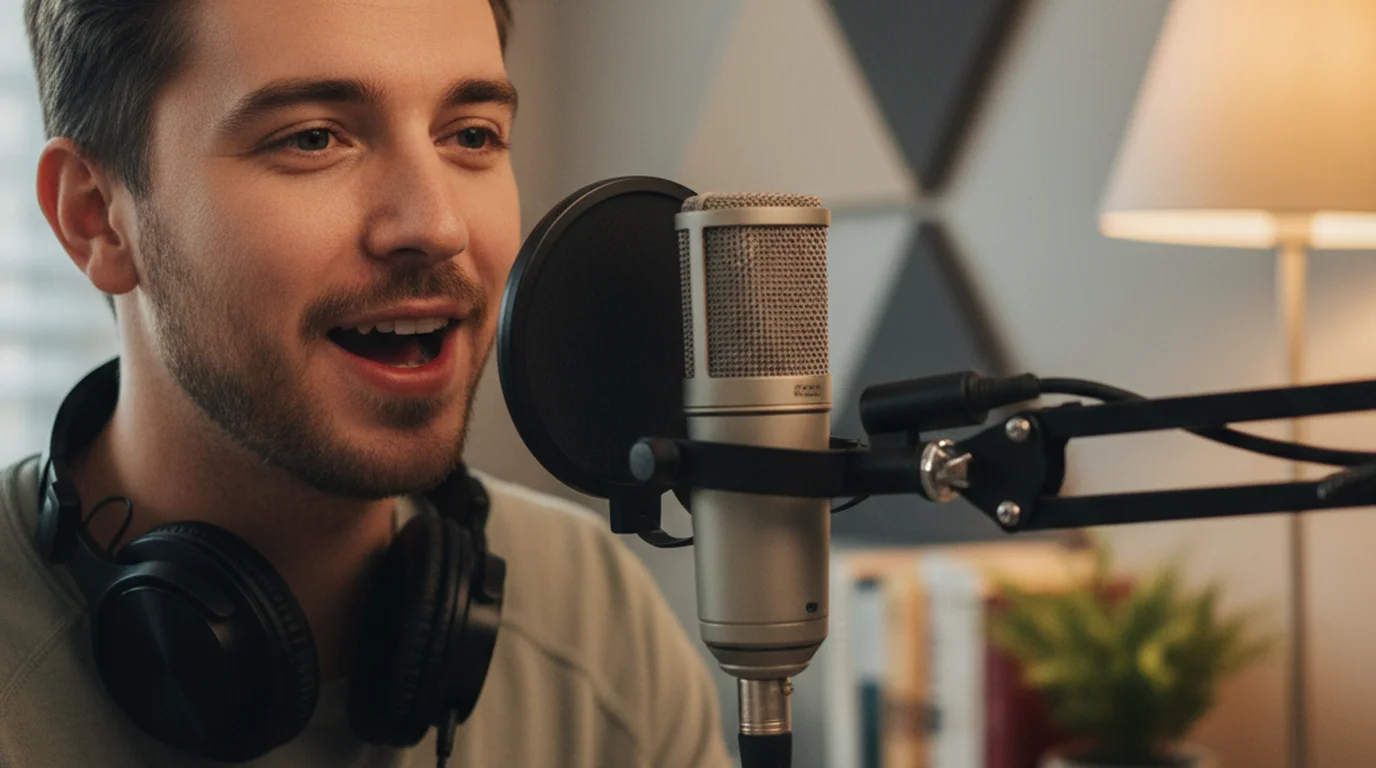
Being asked to repeat yourself shows up in the same handful of places: phone calls, video meetings where the audio is already thin, drive-through windows, and any room with more than about six people in it. The instinct is to say it again louder. That rarely works, because volume and clarity are different variables — a mumbled sentence at high volume is a loud mumbled sentence. The fixes that do work are specific, and which one you need depends on which of four habits is actually degrading your speech. Learning to speak more clearly is mostly a matter of finding out which one applies to you.
To speak more clearly, slow to roughly 130 words per minute, open your jaw wider than feels natural, and finish the final consonant of every word. Those three changes address the most common causes of unclear speech. Volume is rarely the problem: raising it amplifies the same blurred consonants rather than sharpening them.
Diagnose the cause before picking a fix
Most advice on how to speak more clearly is a list of tips applied indiscriminately. That wastes effort, because the four common causes produce different symptoms and respond to different drills. Record two minutes of yourself reading any paragraph aloud, play it back at normal speed, and check which pattern you hear.
Speed. Words run together and whole syllables disappear, particularly in the middle of longer words. The self-test: read 300 words aloud with a timer. Above 160 words per minute, pace is your problem regardless of what else is happening.
Under-articulation. The words are audible but soft-edged — "want to" becomes "wanna," final consonants vanish. The self-test: watch yourself in a mirror while talking normally. If your jaw barely moves, the mouth is doing the minimum work that still gets understood.
Falling volume. Sentences start strong and end quiet, so the last three words — often the important ones — arrive at half the volume of the first three. The self-test: listen specifically to sentence endings on the recording rather than to the sentences as a whole.
Breath. You run out of air mid-sentence and the words after the gasp come out compressed. The self-test: count how many words you deliver per breath while reading. Fewer than eight and the breathing pattern is limiting everything else.
Almost everyone hears more than one of these on a first recording. Fix them in the order above: speed makes all three of the others worse and fixing it first often resolves half the problem on its own.
Fix 1: Slow down — the fastest way to speak more clearly
Rushed speech is the most common reason people are asked to repeat themselves, and it is the easiest to correct because it is measurable. The mouth needs a fixed amount of time to complete each consonant. Speed past that threshold and the consonants get dropped rather than compressed — which is exactly what a listener experiences as mumbling.
The public speaking course text hosted by Lumen Learning cites the National Center for Voice and Speech figure of around 150 words per minute as the average speaking rate for U.S. English speakers, and advises that in a public speaking situation you should speak slower than average, at 125–150 words per minute. Clarity problems cluster above that band, not below it — deliberately slow speech is easy to understand even when it is dull.
Measuring beats guessing here, because nobody accurately estimates their own rate. Read a passage aloud into the speaking speed calculator and get the actual number before deciding whether pace is your issue. If it lands above 160, cutting to 140 will do more for clarity than any drill on this page.
Fix 2: Open your jaw wider than feels natural
If the recording pointed here, learning to speak more clearly is mostly a matter of physical range. Under-articulation is a jaw problem far more often than a tongue problem. Familiar listeners — family, close colleagues — understand the shortest version of your speech, so the mouth optimises toward the smallest movement that still works. Strangers and phone lines do not have that context, and the shortcut stops being invisible.
The correction is physical and slightly uncomfortable. Read a paragraph aloud with two fingers stacked vertically between your teeth to feel the full range the jaw has. Then read the same paragraph normally, aiming to keep about half that opening. It will feel exaggerated and will not sound exaggerated on a recording — that gap between how it feels and how it sounds is the whole reason the habit persists.
Consonant endings are where this pays off. The t in "want," the g in "going," the s in "steps": those endings carry most of the information a listener uses to tell one word from the next, and they are the first thing a lazy jaw drops. For a structured set of drills built around this, our elocution exercises for adults covers targeted articulation work with practice passages.
Fix 3: Finish your sentences at full volume
Falling volume is the least-discussed cause of unclear speech and one of the most damaging to speaking clarity, because English puts new information at the end of a sentence. Trailing off means the predictable words arrive loud and the informative ones arrive quiet.
People trying to speak more clearly almost never think to check this one. The habit usually comes from uncertainty rather than breath — the voice drops as a hedge. The fix is mechanical: in a written script, underline the last three words of each sentence and practise landing them at the same volume as the first three. After a week the marks stop being necessary. Coaching professionals on scripted delivery, this is the single change that most reliably makes someone sound more authoritative on a recording, and almost nobody identifies it in themselves without hearing playback first.
Fix 4: Breathe from the ribcage, not the shoulders
Breath support is the fix that people trying to speak more clearly reach for last and need more often than they expect. Watch your shoulders while you inhale. If they lift, you are breathing into the top of the lungs only, which gives roughly six to eight words before the next breath. Rib-driven breathing — where the lower ribs expand outward and the shoulders stay still — comfortably supports fifteen to twenty words per breath at a conversational pace.
The clarity consequence is indirect but large. A speaker running short of air compresses the last few words before each gasp, so unclear patches appear on a regular rhythm rather than randomly. If the recording shows blur arriving every seven or eight words, the cause is breath, not articulation, and drilling consonants will not fix it.
Practise lying down with a hand on the lower ribs, breathing so the hand rises and the chest stays still. Two minutes a day for two weeks retrains the default. It transfers to sitting and standing faster than most people expect.
Fix 5: Cut the filler that buries your point
Filler words damage speaking clarity twice. They add sound that carries no information, and they blunt the words on either side of them because filler is delivered at low energy. A sentence with three "um"s in it is harder to follow than the same sentence with three seconds of silence in the same places.
Replace filler with a closed-mouth pause of about half a second. Closed-mouth matters: an open mouth during a pause is what turns into "uh" automatically. Half a second reads as deliberate to a listener and feels like an eternity to the speaker, which is the same feel-versus-sound gap that shows up in the jaw drill. Removing filler is the cheapest way to speak more clearly, because it costs no practice at all — only the willingness to be silent for a moment.
This is where clarity of sound meets clarity of message. Effective speaking is not only about being audible — it is about the listener reconstructing your point without effort, and a sentence padded with filler makes that reconstruction harder even when every word is perfectly articulated. Our guide to public speaking skills covers the structural side of that. In any public communication setting — a meeting, a panel, a recorded briefing — effective speaking depends on both halves, and most people only ever practise one.
Fix 6: Record weekly, because you cannot hear yourself speak clearly
Every fix above depends on a feedback loop, because speaking clarity is one of the few skills where the practitioner cannot perceive their own output accurately. You cannot hear whether you speak clearly while you are speaking. Bone conduction means your voice reaches your own ears differently than it reaches anyone else's, so self-assessment while speaking is close to worthless.
Use one fixed passage, roughly 300 words, and read it aloud once a week into a phone recorder. Same text, same time of day. Comparing this week's recording to last week's is a far more sensitive measure than comparing either to your memory of how it felt. Write down specific words that blurred rather than a general impression — "the ends of plurals disappear" is actionable, "sounded mushy" is not.
A teleprompter helps more than a printed page here, for a reason that has nothing to do with video. Reading from paper drops the eyes and closes the throat slightly; reading from a screen at eye level keeps the head up and the airway open, which is the posture you actually speak in. The free online teleprompter runs in any browser and lets you set the scroll to a fixed words-per-minute rate, which turns the pace fix from a thing you try to remember into a thing the script enforces.
When unclear speech is not a technique problem
Everything above assumes that learning to speak more clearly is a matter of retraining a habit. Sometimes it is not, and the distinguishing feature is onset. Habits are lifelong and stable. A medical cause is typically new, gradual, or accompanied by other changes — weakness on one side, difficulty swallowing, a voice that tires unusually fast.
The NHS defines dysarthria as difficulty speaking "because the muscles you use for speech are weak," with unclear speech as the main symptom, and advises seeing a GP about gradual changes to speech. It notes that people with dysarthria are usually referred to a speech and language therapist. No articulation drill substitutes for that assessment when the pattern is a change rather than a habit.
The same applies to a persistent lisp, a stammer, or clarity problems tied to a hearing difference. Our guide to what elocution covers maps how the trainable components fit together, but none of them substitute for an assessment. Those respond to professional speech therapy rather than to self-directed practice, and the practice sometimes reinforces a compensation that a therapist would rather undo. If in doubt about which category applies, the onset question settles it faster than anything else.
Frequently Asked Questions
How do I stop mumbling when I talk?
Mumbling is usually a jaw-opening problem rather than a volume problem, so speaking louder makes it louder without making it clearer. Read a paragraph aloud with two stacked fingers between your teeth to feel the range your jaw is capable of, then read it normally while keeping about half that opening. Slowing to roughly 130 words per minute helps too, because rushed speech gives the mouth less time to complete each consonant.
How can I improve my speaking clarity?
Diagnose before drilling. Record two minutes of yourself reading aloud and identify which of four causes applies: speaking too fast, under-articulating consonants, letting volume fall at the end of sentences, or running out of breath mid-sentence. Each has a different fix, and the common advice to simply slow down only helps the first. Re-record weekly and compare against the same passage rather than against memory.
What is the 3/2/1 rule in speaking?
The 3-2-1 rule is an informal framework popularised by communication coach Vinh Giang for answering questions without rambling: commit to a number before you start talking — three points, two options, or one thing — and then deliver exactly that many. It is a structure device rather than an articulation technique, so it helps clarity of message rather than clarity of sound. It works best when put on the spot in meetings or interviews.
Why do I struggle with speaking clearly?
For most people it is habit rather than ability: the mouth learns the smallest movement that still gets understood by familiar listeners, and that shortcut fails with strangers, on phone calls, and over video. Speed, anxiety, and shallow breathing all amplify it. If unclear speech is new, has come on gradually, or comes with weakness elsewhere, that pattern is medical rather than habitual and should be checked by a doctor.
How can I train myself to speak clearly?
Train against a fixed passage rather than free speech, so you can hear change over time. Read the same 300-word text aloud once a day for four weeks, recording it weekly. Spend five minutes on articulation drills before each read and hold your pace near 130 words per minute. Progress shows up in the recordings well before it shows up in how speaking feels, which is why the recording matters more than the practice log.
How to increase voice clarity?
Voice clarity comes from breath support and consonant completion rather than from volume. Breathe so the lower ribs expand rather than the shoulders lifting, which extends how many words you can deliver per breath from around six to fifteen or more. Then finish the final consonant of each word — the t in want, the g in going — because those endings carry most of the information a listener uses to separate one word from the next.
What causes difficulty speaking clearly?
Most everyday unclear speech comes from four habits: excessive pace, limited jaw movement, falling volume at the end of sentences, and shallow breathing. Environmental factors such as background noise and poor phone or video audio make all four worse. A separate category is medical: the NHS describes dysarthria as difficulty speaking caused by weakness in the muscles used for speech, and advises seeing a GP about gradual changes to speech.
James HollowayJames Holloway coaches executives, founders, and professionals on scripted delivery and on-camera presence. His writing covers speech structure, words-per-minute pacing, and why most people's instincts about eye contact work against them.
Practise Clarity Against a Real Script
Clarity work needs a fixed passage and a fixed pace. Teleprompter-Scrolling Scripts scrolls your practice text at the words-per-minute rate you set, keeping your head up and your speed honest so the weekly recordings actually show progress. Free on iPhone, iPad, Mac, and web.
Use Free Online Teleprompter Get the Free App