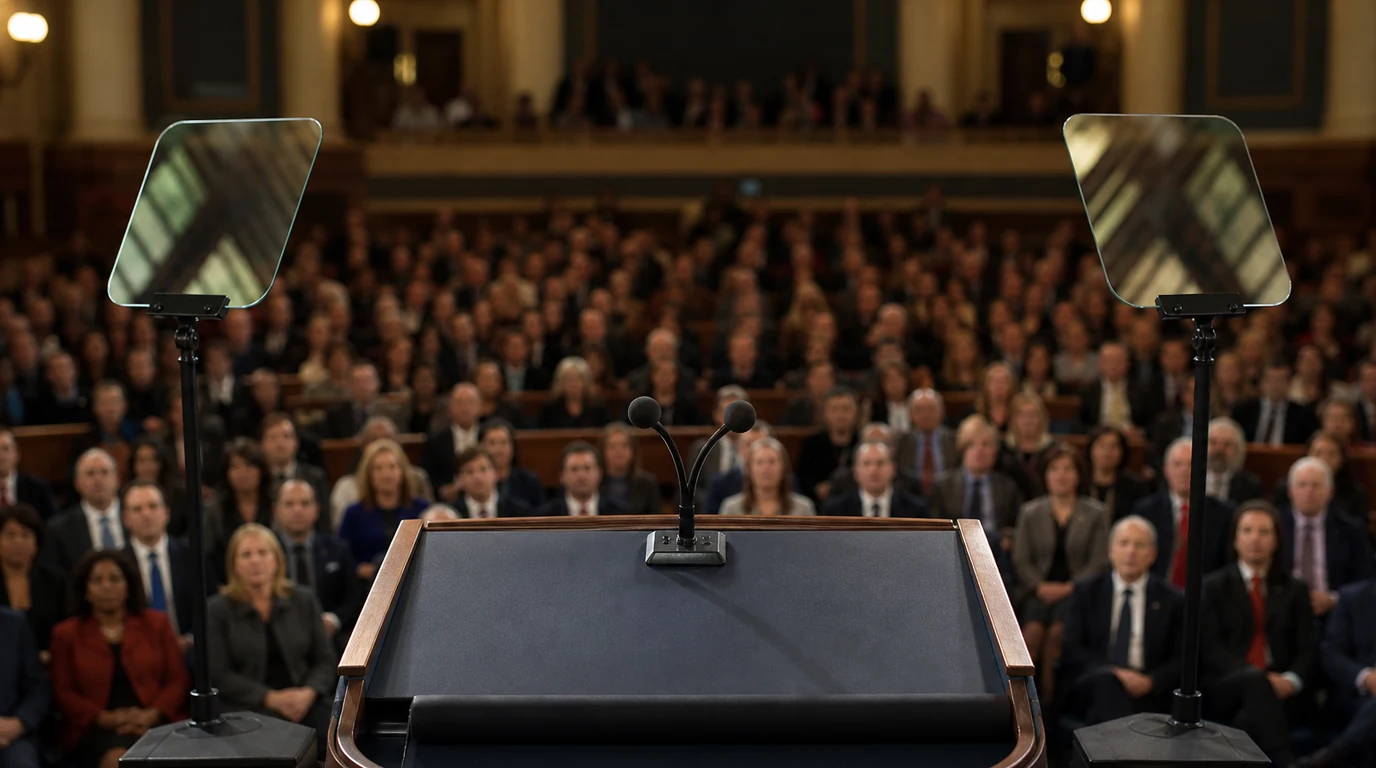
What Is an Interrotron? The Teleprompter-Based Camera Technique Behind Intimate Documentaries
 Ryan Kowalski · June 25, 2026 · 6 min read
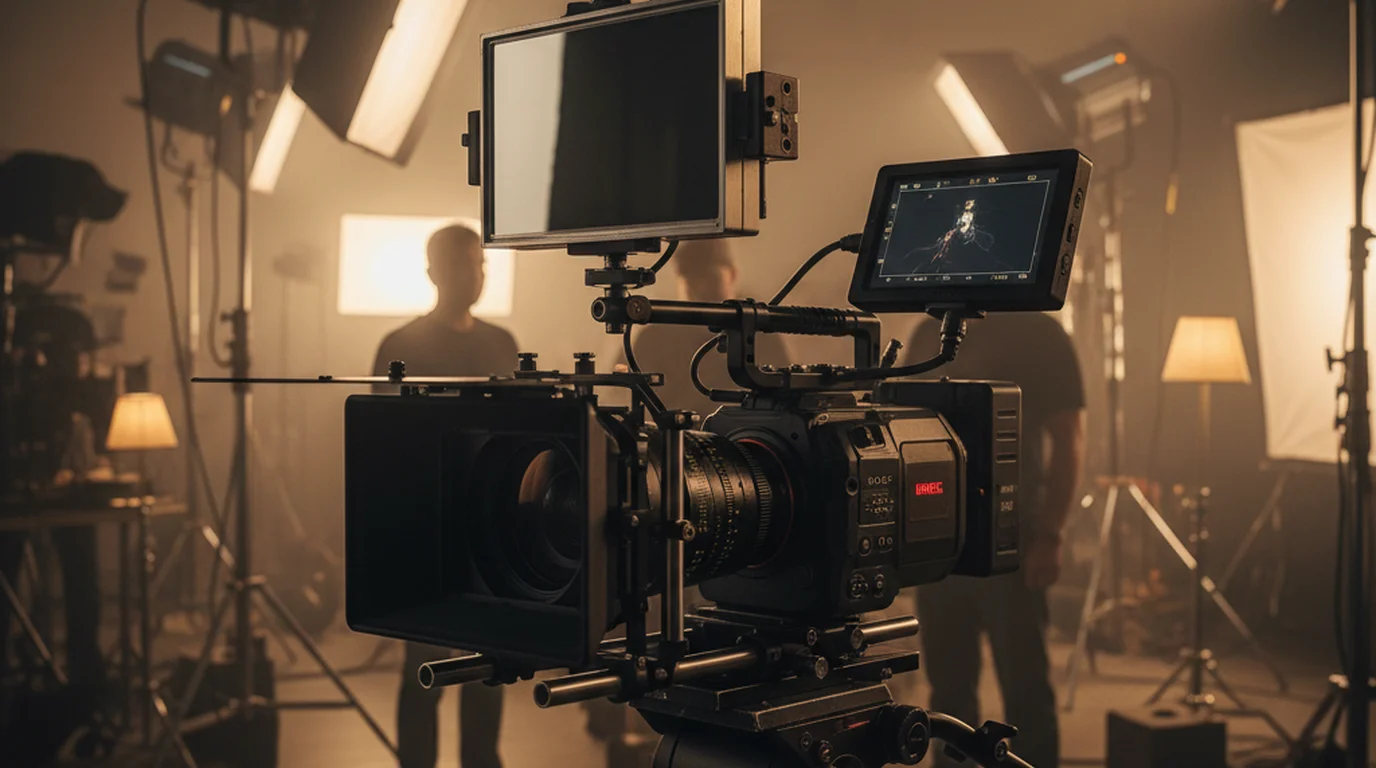
If you've watched a documentary where the interview subject seems to be looking directly at you — not at someone off to the side — that effect was probably created with an Interrotron. It's one of the most compelling camera techniques in documentary filmmaking, and almost nobody outside of production knows what it is or that it's built from the same beam splitter glass used in broadcast teleprompters. Director Errol Morris invented it in the early 1990s, and it changed how filmed interviews look and feel.
An Interrotron is a modified teleprompter setup using two beam splitter assemblies — one mounted in front of the interviewer's camera, one in front of the subject's camera — with live video feeds of each person reflected onto the glass. The subject sees the interviewer's face directly in front of the lens they're being filmed by, creating true eye contact between the two while both appear to look directly into their respective cameras. On screen, the interview subject's gaze appears to look directly at the viewer.
The Problem the Interrotron Solves
In a standard documentary interview setup, the subject sits in front of the camera and looks slightly off-axis — to the left or right of the lens — to maintain eye contact with the interviewer, who is typically seated beside or just below the camera. This creates the familiar "looking past you" quality of most talking-head interviews.
The psychological effect is significant. When someone on screen doesn't meet your gaze, the viewer perceives it as the subject talking to someone else, not to them. The viewer is a bystander to a conversation rather than a participant. For documentary work, this creates emotional distance between the subject and the audience at exactly the moment you want intimacy — when someone is sharing something real.
Errol Morris, working on the 1988 documentary The Thin Blue Line, wanted interview subjects to maintain genuine eye contact with the interviewer while also appearing to look directly into the camera. His solution was to use two teleprompter units in an arrangement where each person could see the other while looking at the lens.
How the Interrotron Works: The Optics Explained
The Interrotron uses two standard teleprompter beam splitter assemblies — the same half-silvered glass panels used in broadcast teleprompters, mounted at 45 degrees in front of camera lenses. In a normal teleprompter, the beam splitter reflects text from a monitor below. In the Interrotron, it reflects a live video image of the other person.
Here's the specific setup: the subject has a camera pointed at them with a teleprompter beam splitter in front of the lens. A monitor below the beam splitter displays a live video feed of the interviewer's face. When the subject looks at this image of the interviewer, they appear to look directly into the camera lens (because the reflected image is on the same optical axis as the lens). The interviewer has the same setup, in reverse — their camera has a beam splitter, and a monitor below shows the subject's live face.
The result: the subject looks at the interviewer's face and sees them look back. Genuine eye contact occurs between two people. But on camera, both appear to look directly into their respective lenses. In the final film, the subject appears to make direct eye contact with the viewer.
Errol Morris coined the name "Interrotron" and described his invention in a 1997 essay on his website, noting that it derived from the words "interview" and "terror" — a reference to the confrontational intimacy the device creates. Morris first used it extensively on Fast, Cheap & Out of Control (1997) and has used it on every documentary since, including The Fog of War (2003) and The Unknown Known (2013). The device produces what Morris describes as "first person" documentary interviews — the subject appears to address the viewer directly rather than an off-camera interviewer.
Interrotron vs. Standard Teleprompter: What's Different
A standard teleprompter uses one beam splitter to reflect text from a monitor below, letting a presenter read their script while looking at the camera lens. It's a one-person, one-camera setup where the reflected content is always text.
The Interrotron uses two beam splitter setups facing each other, with live video feeds rather than text. The reflected content is a person's face, not a script. It requires two cameras, two beam splitter assemblies, two monitors, and a live video signal routing system to connect the feeds. In terms of hardware, it's essentially two teleprompter heads wired to send live video to each other instead of to a script display.
The beam splitter glass at the heart of both systems is the same technology — a partially silvered panel (typically 70/30) that reflects from one direction while transmitting from the other. Understanding the teleprompter optics is the key to understanding why the Interrotron works: the reflective surface is on the same optical axis as the camera lens, so whatever is reflected appears to come from the lens position.
Can You Build a DIY Interrotron?
Yes, and several independent filmmakers have documented the process in detail. The core requirement is two teleprompter head units — the camera-mount assembly with beam splitter glass — and two small monitors or tablets connected with live video feeds between positions.
For a basic DIY build, you need: two consumer teleprompter heads ($100–$200 each, such as the ikan PT-ELITE-PRO or Glide Gear TMP 100), two small HDMI monitors or tablets, an HDMI splitter or video switcher to route feeds, and two cameras. The total hardware cost runs $300–$600 depending on the teleprompter heads you choose. Slate Roof Films has published a detailed walkthrough of their DIY Interrotron build — built for $400 — that has been used on paid documentary productions.
The commercial alternative is Eye Direct — a single-unit device that functions like one half of an Interrotron, letting the interview subject see the interviewer's face reflected in front of the camera lens. Eye Direct units rent for approximately $200–$400 per day and are available from camera rental houses in most major cities.
The Interrotron principle — using beam splitter optics to create on-axis eye contact during interviews — has been adopted beyond documentary film. In corporate video production, B-roll company surveys from 2024 find that approximately 18% of senior executive interview productions now use some form of on-axis eye contact device (either Interrotron, Eye Direct, or DIY equivalents) for CEO and leadership content, up from under 5% in 2019. The adoption has been driven by the rise of direct-to-camera corporate content on LinkedIn and YouTube, where first-person authority delivery is perceived as more credible than standard off-axis interview framing.
Is an Interrotron Right for Your Production?
The Interrotron is most valuable in documentary or interview contexts where emotional intimacy is central to the content — personal testimonials, in-depth character profiles, and investigative interviews where the subject's relationship with the viewer is the point. For corporate talking-head videos, product testimonials, and case study interviews, the direct-camera eye contact effect is similarly powerful.
It's unnecessary for standard B-roll interviews, news-style comments, or quick vox pops where the off-axis look is conventional and expected. And it requires genuine production setup — two cameras, a live feed connection, two operators, and careful alignment of the beam splitter to the lens axis. For a solo creator or small crew, the logistics often don't justify the effect.
For most content creators who want the "looking directly at the viewer" effect in their videos, a teleprompter app on a phone positioned close to the camera lens achieves most of the benefit: the presenter looks slightly down at the script, which is close enough to the lens axis that it reads as near-direct eye contact on camera. The full Interrotron setup is overkill for scripted solo creator content — it's designed specifically for two-person interview scenarios where genuine eye contact between interviewer and subject is the goal.
Frequently Asked Questions
What is an Interrotron used for?
An Interrotron is used to create genuine eye contact between an interviewer and a documentary subject while both look directly into the camera lens. Two teleprompter beam splitter assemblies reflect live video of each person onto the glass in front of the opposite camera. The result: the interview subject appears to make direct eye contact with the film viewer.
How much does an Interrotron cost?
A professional Interrotron setup costs $3,000–$8,000 in equipment (two teleprompter heads, monitors, cameras, cabling). Professional rental rates are $800–$1,500 per day. DIY builds using consumer teleprompter hardware have been documented at under $400 in total equipment cost.
Can you build your own Interrotron?
Yes. A DIY Interrotron uses two consumer teleprompter head units ($100–$200 each) with a small monitor or tablet at each position showing a live video feed of the opposite person. Several filmmakers have published complete build guides — Slate Roof Films built a working version for under $400 used on paid documentary productions.
What is the difference between eye direct and Interrotron?
Eye Direct is a commercial single-unit product using a beam splitter to let the interview subject see the interviewer's face on-axis with the camera lens. The Interrotron is a two-unit setup coined by Errol Morris requiring both participants to have a camera-mounted beam splitter. Eye Direct is a simpler, more portable commercial product; the Interrotron is a full two-camera symmetric arrangement.
Direct-Camera Eye Contact Without the Hardware
A teleprompter app on your iPhone positioned below the lens puts your script on the same optical axis as the camera — so you read naturally while appearing to look directly at your viewer.
Use Free Online Teleprompter Get the Free App
Ryan KowalskiRyan Kowalski reviews iOS and macOS apps for content creators, with a focus on teleprompter, camera, and productivity tools. His rule: use an app daily for at least two weeks before writing a word about it.