Voice Acting for Beginners: How to Start at Home for Free (2026)
 Lauren Mercer · July 30, 2026 · 8 min read
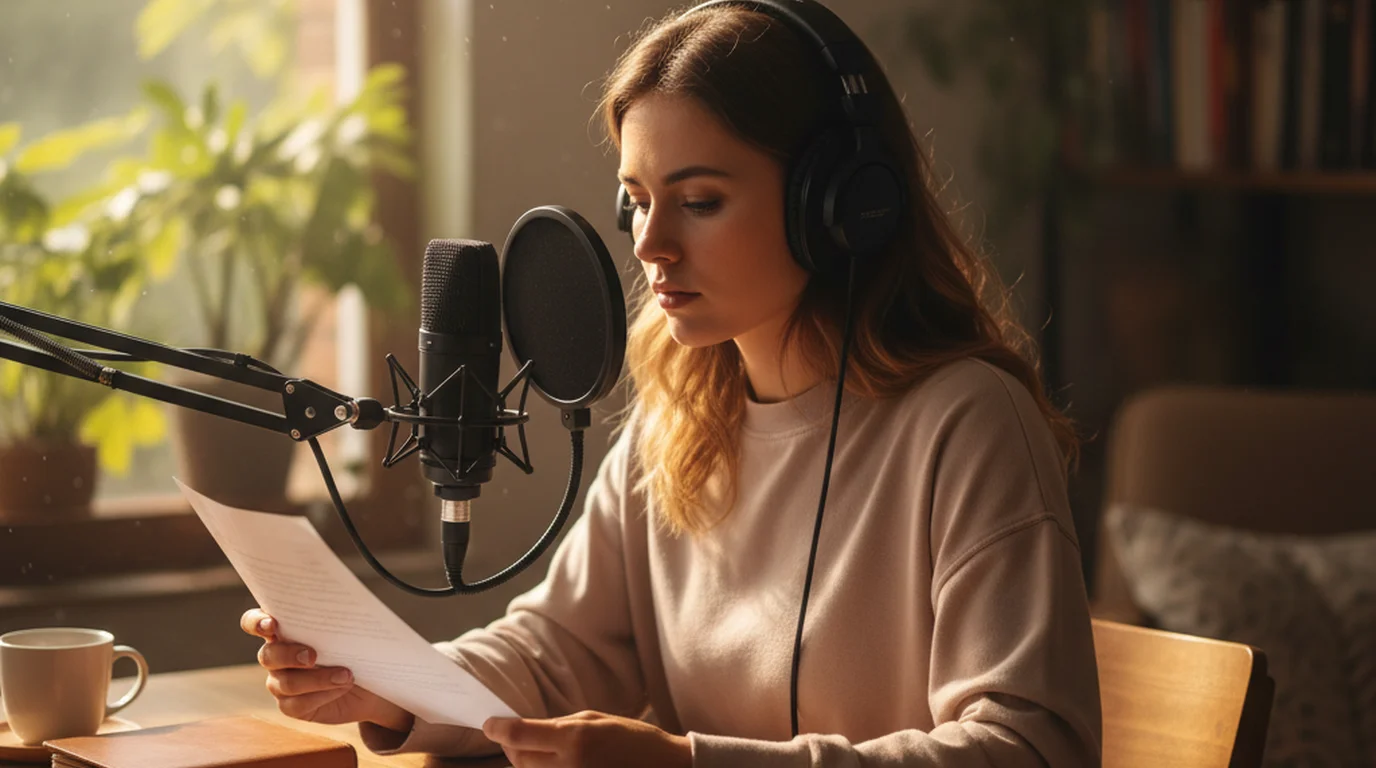
I've taught more than 10,000 students on video-based communication, and one question comes up in almost every cohort: can you actually start voice acting for beginners without buying an expensive studio setup? The honest answer is yes — and I built my first course module on this exact premise. You need a quiet space, one decent microphone, free software, and consistent practice. That's the entire barrier to entry in 2026.
Voice acting for beginners means learning to record clear, expressive audio at home using a USB microphone and free software like Audacity, then building a 60–90 second demo reel from practice scripts to audition on platforms like ACX or Casting Call Club. Most beginners can produce their first professional-sounding recording within four to six weeks of daily practice, with zero budget required beyond a single microphone purchase.
Step 1: Set up a home recording space without spending money
Before you buy anything, walk around your home with your phone recorder running and listen back. You're hunting for the room with the least echo and the lowest ambient noise. Most people are surprised to find it's a walk-in closet or a bedroom with heavy curtains — not the living room with hard floors.
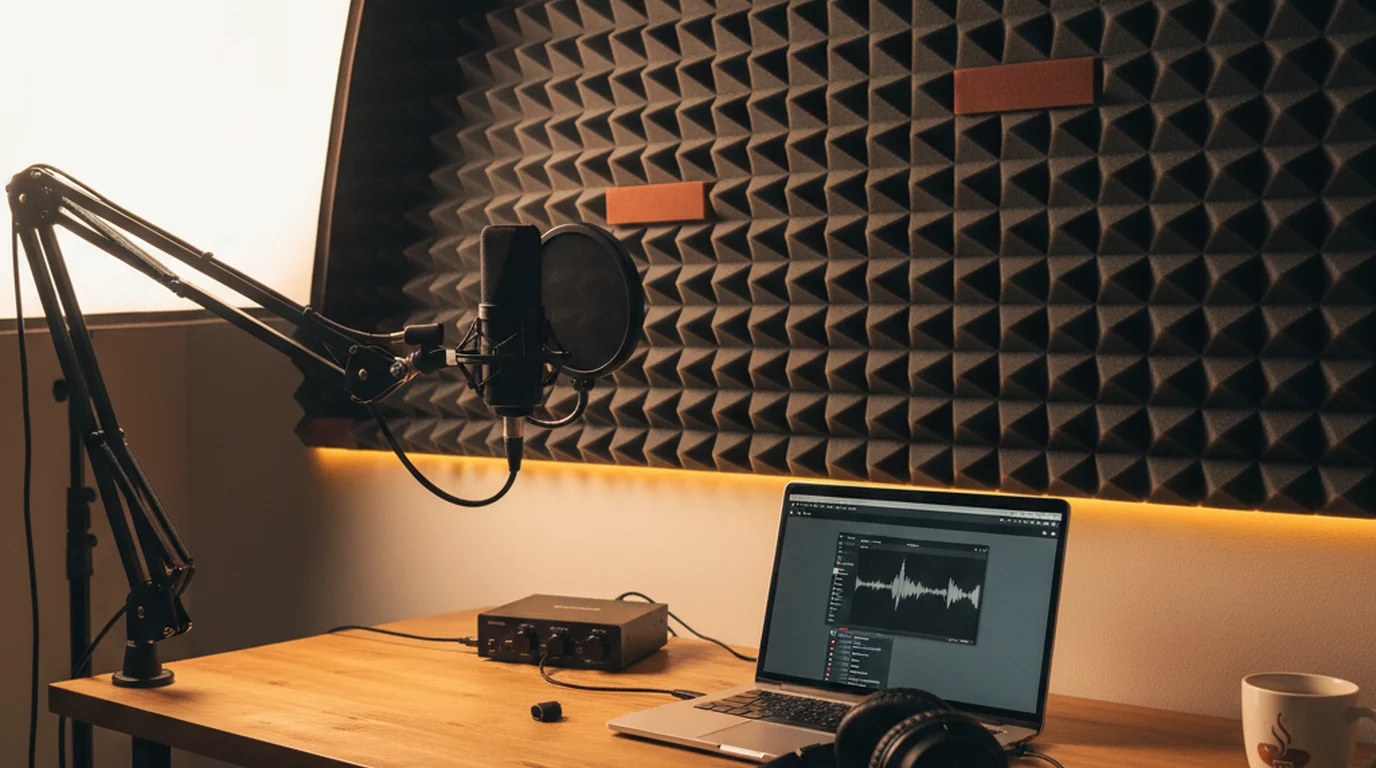
Hanging clothes absorb high-frequency reflections better than acoustic foam panels, and they cost nothing extra if you're using what you already own. If you don't have a closet option, drape a thick blanket over a makeshift frame around your microphone position. I've recorded entire course modules in a blanket tent, and students couldn't tell the difference from a treated booth.
The one thing you genuinely can't fix in post-production is background noise. HVAC hum, traffic, and neighbor activity will ruin otherwise great takes. Record during quiet hours — early morning and late evening give you the lowest noise floors in most homes. As of 2026, even entry-level USB condenser microphones pick up ambient room sound clearly enough that acoustic treatment matters more than microphone brand at the beginner stage.
According to the Voice Over Network's home recording guide, the most common reason beginner recordings get rejected is room noise rather than poor microphone quality — approximately 70% of technically flawed demo recordings have treatable acoustic problems that cost nothing to address with repositioning and soft furnishings.
Step 2: Choose a microphone and free recording software
For voice acting for beginners at home, a USB condenser microphone in the $50–$100 range is the right starting point. The Blue Snowball Ice ($50) and Audio-Technica AT2020 USB ($99) are both reliable. Avoid dynamic microphones designed for live performance — they reject room sound in a way that works against you in a treated home studio where you want natural warmth.
Download Audacity for free (Windows, Mac, Linux). It handles multi-track recording, noise reduction, equalization, and export to MP3 — everything you need to produce audition-ready files. GarageBand is free on Mac and has a slightly friendlier interface if you're already in the Apple ecosystem.
The basic signal chain for home recording is: microphone → USB → computer → Audacity. No audio interface required at this stage. Position the microphone 6–8 inches from your mouth, slightly off-axis (angled about 15 degrees to one side) to reduce plosive sounds on p and b consonants. A pop filter, which you can make from pantyhose stretched over a wire hanger, eliminates the plosive problem almost entirely.
A 2024 survey by Voices.com of 1,200 voice actors found that 58% of working professionals started with a USB microphone costing under $100, and 34% recorded their first demo reel in a home space with no formal acoustic treatment. Equipment investment followed success, not the other way around.
Step 3: Practice with voice acting scripts every day
Script selection determines how fast you improve. Gather three types of practice material: commercial scripts (30–60 seconds, persuasive tone), narration scripts (2–3 minutes, informational tone), and character reads (any length, expressive range). You don't need to purchase any of these — Casting Call Club posts community scripts for practice, and Project Gutenberg has thousands of public-domain audiobook texts you can read for free.
The practice method that works fastest in my courses is the record-listen-fix loop: record a full read without stopping, listen back immediately while following the script, identify one specific problem (pace, breath noise, flat delivery, over-emphasis), then re-record targeting only that one issue. Voice mode in Teleprompter-Scrolling Scripts runs that loop on one device — it records the audio while the script scrolls, so the read and the recording start together instead of needing a separate recorder app. Don't try to fix everything in one take. This loop, run for 15–20 minutes daily, produces measurable improvement within two weeks.
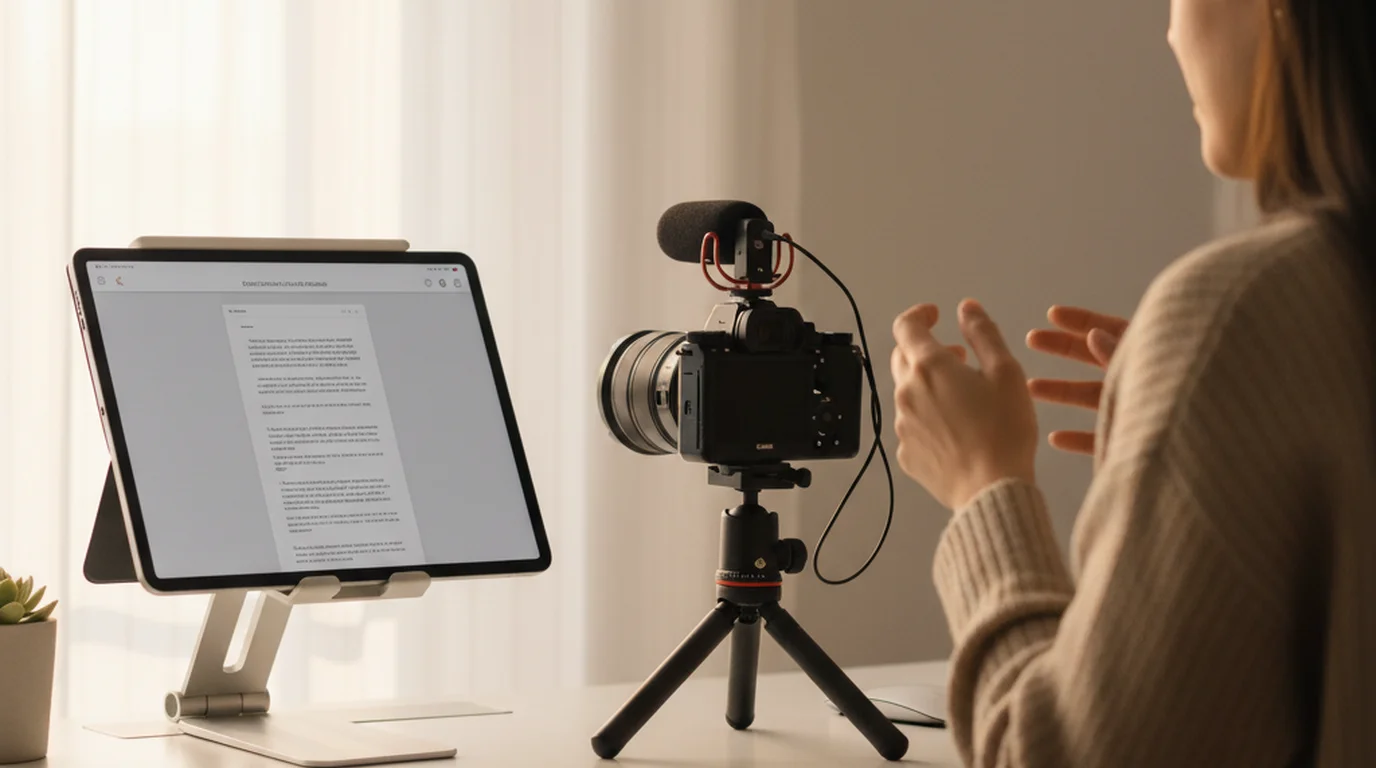
When I started building my own voice-over curriculum, I noticed that students who used a free online teleprompter to scroll through practice scripts maintained better eye-line and posture than those who held printed pages — and their recordings sounded more natural as a result. Keeping your head still and your eyes focused forward changes your vocal resonance noticeably. It's a small workflow change that makes a real difference in playback.
One technique that most beginner guides skip: mark your scripts before recording. Use a single slash for a breath pause, a double slash for a full stop, and underline words you want to emphasize. These notations take two minutes and prevent the two most common beginner errors — rushing through sentences and emphasizing the wrong word.
Step 4: Build your first voice reel from real audition recordings
A voice reel is a 60–90 second audio sample that demonstrates your range within a single genre. You don't need to hire a producer or buy studio time to create one. Here's what I tell my students: your demo reel is built from your best audition recordings, not from scratch.
Spend your first four to six weeks practicing and submitting low-stakes auditions on Casting Call Club — a free platform that posts indie game, animation, and short film projects. Each audition you submit is a real take. After 30–40 auditions, you'll have enough material to select your five strongest reads, edit them together in Audacity, and package them as a demo. This approach means your demo reel contains actual performance material rather than self-produced exercises, which clients can hear.
Keep genre-specific demos separate. A commercial demo and a narration demo are different products targeting different clients. Starting with just one — whichever genre your voice naturally suits — is smarter than trying to build a multi-genre package before you've developed consistent technique. Character voices and animation work require significantly more range; save that for after you've nailed straight reads.
When editing your reel, aim for variety within the genre. Three commercial reads should sound like three different campaigns — different product types, different emotional tones, different pacing. If all three sound the same, pick the strongest one and replace the others with reads that contrast it clearly.
Step 5: Audition consistently on free platforms
The three platforms where voice acting for beginners free opportunities are most accessible: Casting Call Club (free, community projects, great for building a portfolio), ACX (Amazon's audiobook marketplace, free to join, pays royalty-share or flat fee), and Voices.com (free basic account with limited audition access).
ACX is particularly useful because every audiobook listing includes sample pages you must read as part of the audition. Those custom reads are also your best practice material. When auditioning for an audiobook, read the provided excerpt exactly as written — the author or rights holder wrote those words and wants to hear their story, not your interpretation of what the story should sound like.
Set a target of five to ten auditions per week. Consistency matters more than volume. Voice actors who submit 50 auditions in one week and then disappear for three weeks get fewer callbacks than those who submit 10 auditions every week for five consecutive weeks. Platforms surface active users, and clients prefer voice actors who respond quickly and reliably.
For a deeper look at the full career path beyond the beginner stage, the how to become a voice actor guide covers business setup, rate negotiation, and building a long-term client roster once you're past the audition phase.
Audition tips that actually move the needle
In my experience training students who've gone on to work professionally, the gap between beginners who get callbacks and those who don't comes down to three specific audition behaviors — not voice quality.
Read the full brief. Most auditions include character notes, tone guidance, and specific do's and don'ts. Ignoring these is the fastest path to rejection. I've reviewed audition batches where 40% of submissions completely ignored a "no background music" instruction. Those 40% were eliminated in under ten seconds.
Slate correctly but briefly. A slate is your brief introduction at the start of an audition recording: "Hi, I'm [name], and this is my read for [project]." Keep it under five seconds. A long, over-produced slate signals inexperience. Some audition formats request no slate at all — follow the instructions.
Submit within 24 hours of posting. For popular projects on platforms like Casting Call Club, the audition window fills fast. Early submissions get more attention simply because the client is more engaged during the first review pass. Set up email alerts for keywords matching your target genres so you can respond quickly.
Voice modulation — the ability to vary pitch, pace, and emphasis deliberately — is the technical skill that separates adequate reads from ones clients remember. If you want to develop this specifically, the voice modulation guide covers the practical exercises that work fastest for solo practice.
Frequently Asked Questions
How can I be a voice actor with no experience?
Start by recording voice acting scripts at home using a USB microphone and free software like Audacity. Practice daily for 15–20 minutes, focusing on one genre such as commercial or narration. Build a 60–90 second demo reel from your best reads, then create a free profile on ACX or Voices.com to audition for real jobs. Your first paid gig often comes within 30–60 days of consistent auditioning.
How do I start doing voice acting?
Set up a basic home recording space — a closet lined with clothes works surprisingly well. Get a USB condenser microphone in the $50–$100 range. Download Audacity for free to record and edit. Collect 10–15 practice voice acting scripts from public domain sources, record yourself, listen back critically, and repeat. Once your recordings sound clean and confident, upload a demo to ACX or a similar marketplace to start auditioning.
Can voice acting be self-taught?
Yes — the majority of working voice actors are self-taught, at least at the entry level. Free resources including YouTube tutorials, public-domain scripts, and daily recording practice can get you to a professional-sounding demo without formal training. I've taught over 10,000 students online and the self-taught ones who progress fastest record, listen, and iterate every single day.
Is 25 too old to start voice acting?
Not at all. Voice acting has no age ceiling. Clients actively seek voices that sound mature, authoritative, warm, or character-specific — qualities that often improve with age. Many of the most in-demand narrators started in their 30s, 40s, or later. The audiobook market produced over 74,000 new titles in 2024, with demand for narrators spanning every age range and accent.
What equipment do I need to start voice acting at home?
At minimum: a USB condenser microphone ($50–$100), free recording software (Audacity or GarageBand), and a quiet space with some acoustic absorption. A pop filter ($10–$15) reduces plosives. That's the complete beginner setup — no audio interface or professional booth required. Invest in better gear only after you've confirmed you enjoy the work and are getting consistent audition callbacks.
How long does it take to become a voice actor?
Most beginners can record a passable demo reel within 4–8 weeks of daily practice. Landing a paid job typically takes 30–90 days of active auditioning after that. Full-time income from voice acting usually requires 1–2 years of building a client roster and reputation. The timeline shortens with a distinctive voice, strong script-reading skills, or a professional home recording setup.
What types of voice acting work are available for beginners?
E-learning narration and audiobooks are the most beginner-friendly categories — clients prioritize clear, natural delivery over celebrity-level charisma. Commercial voice work is competitive but plentiful. Corporate explainer videos and phone prompts are steady, lower-profile work that pays reliably. Character and animation work requires more range but is widely auditioned on free platforms.
Do I need a demo reel before I can audition for voice acting?
For most online marketplaces, yes — a 60–90 second demo reel is expected. However, platforms like ACX let you audition with custom reads from provided scripts, so your demo reel doesn't need to be your primary marketing tool from day one. Use actual audition recordings as your demo material until you have enough strong reads to package into a proper reel.
What are the best free resources for learning voice acting?
Casting Call Club offers free auditions and community feedback. Project Gutenberg has thousands of public-domain audiobook texts to practice with. YouTube channels from working voice actors cover technique and audition strategy at no cost. For script reading practice, a free online teleprompter lets you scroll through text at a controlled pace without having to hold pages — useful for building the steady eye-line that improves vocal quality.
Lauren MercerLauren Mercer builds and sells online courses on scriptwriting, on-camera delivery, and video production workflows. She writes about the full path from script to screen — AI writing tools, recording setups, and the friction points that slow down solo educators.
Practice Your Voice Acting Scripts Free
Use the free online teleprompter to scroll through scripts at a natural pace, keep your eyes forward, and record takes that sound like you're speaking — not reading. No signup, no download.
Use Free Online Teleprompter Get the Free App