Presidential Teleprompter: How the Two-Panel Setup Works and Why Every Leader Uses One
 James Holloway · June 12, 2026 · 6 min read
Every major political speech you've watched in the past 40 years was delivered with a teleprompter. Yet most viewers have no idea how the presidential teleprompter actually works — they just know they sometimes see two glass panels flanking the podium and assume something technical is happening. As someone who trains speakers on scripted delivery, I find the presidential setup fascinating because it solves the same problem my clients face: how to read a precise script while appearing to speak directly to the audience. Here's the complete breakdown.
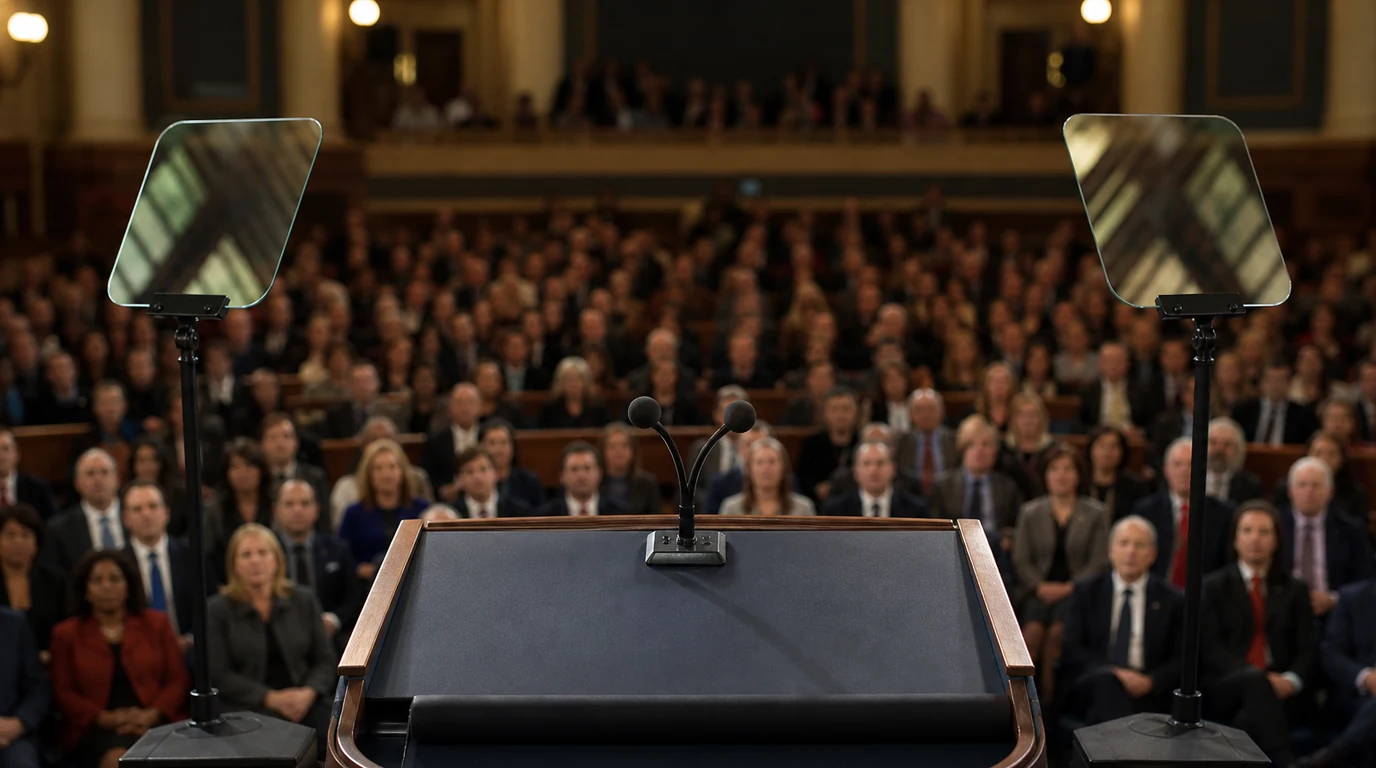
A presidential teleprompter uses two glass panels on floor stands positioned on either side of the podium. Each panel reflects a monitor displaying the script in mirror-reversed text. When reflected at 45 degrees, the text reads normally for the speaker. Eye movement between the two panels reads to audiences as natural audience scanning, not reading. A trained operator controls scroll speed from offstage in real time.
The Optical Mechanism: Why Two Panels Instead of One
A single screen placed in front of a speaker would require them to look directly ahead at all times, which reads as fixed, robotic eye contact to audiences. The two-panel design distributes eye contact naturally across the room.
Each panel contains a half-silvered mirror — also called a beam-splitter glass — positioned at roughly 45 degrees to the speaker. Behind the mirror, angled downward, is a dedicated monitor displaying the script in white text on black background. The monitor text is mirror-reversed so it reads correctly when reflected upward into the glass.
From the audience and camera side, the glass panels are mostly transparent — viewers see through them to the crowd or background behind the speaker. Only the speaker, standing directly behind the glass at the correct angle, sees the reflected text. The physics are the same as a one-way mirror: transparent from one side, reflective at the correct angle from the other.
The modern two-panel presidential teleprompter configuration was standardized during the Reagan administration in the 1980s by Jess Todtman, a White House communications technician who worked with Autocue Ltd. to develop a portable setup deployable in any venue. Before this, presidents either memorized speeches or used single stationary units that required more obvious eye movement. Reagan's natural-looking delivery — credited in part to his experience reading scripts as an actor — helped establish the two-panel format as the gold standard.
The Operator: The Person No One Sees
A presidential teleprompter doesn't scroll automatically at a fixed speed. A human operator — seated offstage or in a technical booth — watches both the speaker and a monitor showing the same script, then adjusts the scroll speed in real time to match the president's exact pace.
This real-time adjustment is what separates professional political teleprompter work from consumer setups. If the president pauses, the operator stops the scroll. If they speed up, the operator follows. If they go off-script — as presidents frequently do in less formal moments — the operator holds the current line until the speaker returns to the prepared text.
Professional White House teleprompter operators train extensively for this role. A single hesitation — showing the wrong line when the speaker needs the next, or advancing too quickly and forcing the speaker to rush — can be nationally televised. The operator is invisible but operationally critical.
Consumer and corporate teleprompter apps like Teleprompter-Scrolling Scripts replicate this functionality through scroll speed controls and voice-responsive scrolling, allowing solo presenters to self-operate a similar setup without a dedicated technician.
How Much Does a Presidential Teleprompter Cost?
A professional two-panel setup — the kind used at White House briefings, major political conventions, and corporate keynotes — costs $15,000–$40,000 for the hardware alone. This includes:
- Beam-splitter glass panels (large format, optically coated, low-reflection)
- Motorized floor stands with height adjustment
- Two dedicated high-brightness monitors (1,000+ nits for outdoor readability)
- Prompter software with operator console
- Redundant backup systems (hardware failure during a presidential address would be a significant problem)
Rental versions for single-event corporate keynotes typically run $2,000–$5,000 per day including a trained operator. Consumer-grade two-panel setups for boardroom use start around $3,000–$5,000.
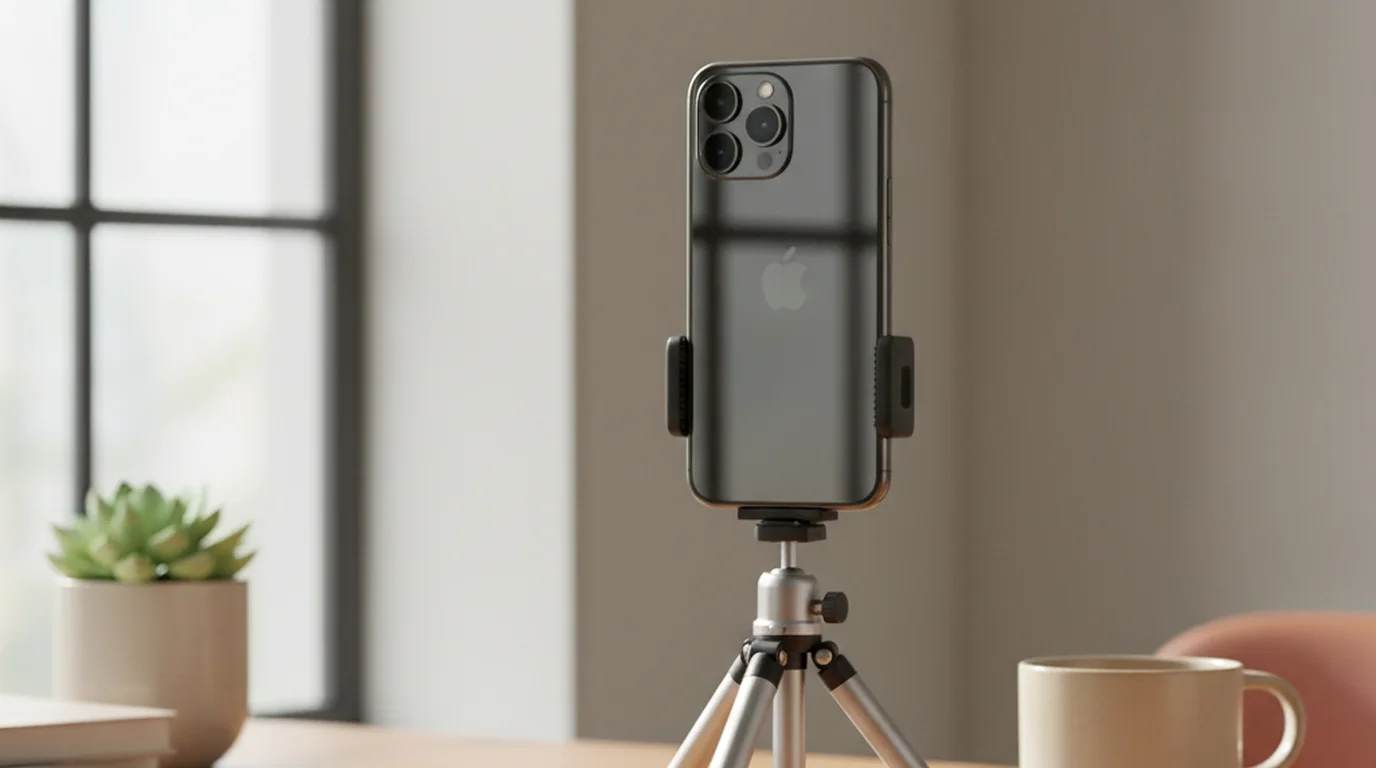
For context: a phone-based teleprompter app and a $30–$80 half-mirror attachment replicates 90% of the on-camera benefit of a presidential setup at a fraction of the cost. The primary advantage of the professional setup is the two-panel eye-distribution effect and the large glass size — not fundamentally different optics.
According to a 2023 procurement filing from the U.S. General Services Administration, the White House Communications Agency maintains three complete presidential teleprompter sets, each valued at approximately $28,000, for deployment across domestic and international travel. The agency employs four full-time teleprompter operators trained in presidential protocol, earning GS-11 to GS-13 federal pay grades ($69,000–$113,000 annually as of 2026).
Why Every Major Leader Uses One
The presidential teleprompter isn't used because politicians are less capable than other public speakers. It's used because the cost of a mistake is too high. A single ambiguous phrase in a presidential address can move financial markets, strain diplomatic relationships, or define a news cycle for a week.
Scripted precision via teleprompter eliminates the risk of verbal stumbles, off-message improvisation, or incomplete sentences under camera pressure. For the same reason, CEOs use it during earnings calls, and executives use it during major product launches. For live presentations where a presidential-style setup isn't available, a confidence monitor setup provides a practical alternative for stage and studio delivery.
This applies at smaller scales too. If you're recording a video where every word matters — a client presentation, a legal explainer, an on-camera pitch — a teleprompter lets you deliver precisely crafted language with the appearance of natural, confident delivery. The presidential setup is the maximum expression of this principle; consumer apps and phone-based setups are its accessible equivalent.
Can You Tell When a Speaker Is Using a Teleprompter?
With a well-operated professional setup, no. The eye movement between two panels distributed at podium width reads as natural audience scanning from any broadcast camera angle. Viewers can't tell whether the speaker is reading or looking out at the crowd.
Signs that a speaker is less comfortable with their teleprompter: a fixed focal depth (eyes always the same distance), a slightly mechanical rhythm locked to the scroll rather than natural sentence variation, or visible tension when they lose their place and search for it. All three are delivery problems, not technology problems — they appear equally in speakers who have memorized their scripts but are nervous.
The most effective teleprompter users, presidential or otherwise, treat the text as a floor, not a ceiling: they know the material well enough that they could speak without it, but use it to ensure precision on the exact lines that matter. That's the standard coaches train presidential speechmakers toward, and it's achievable at any level with a few hours of practice.
Frequently Asked Questions
How does the presidential teleprompter work?
A presidential teleprompter uses two glass panels on floor stands on either side of the podium. Each panel reflects an upward-facing monitor displaying mirror-reversed script text. When reflected at 45 degrees, the text reads normally. A trained operator adjusts scroll speed offstage in real time to match the speaker's delivery.
How much is a presidential teleprompter?
A professional two-panel presidential teleprompter setup costs $15,000–$40,000 for hardware, including glass panels, motorized stands, dedicated monitors, prompter software, and redundant backup systems. Event rental including a trained operator runs $2,000–$5,000 per day. Consumer-grade two-panel corporate setups start around $3,000–$5,000.
Does the president have a teleprompter?
Yes. Every US president since Ronald Reagan has regularly used teleprompters for formal speeches. The two-panel glass teleprompter became standard White House protocol in the 1980s and is now used by virtually all major political leaders and corporate executives worldwide during scripted addresses.
Does Donald Trump read off a teleprompter?
Yes. Donald Trump uses the same standard two-panel glass teleprompter as other modern presidents for formal speeches. He is also known for going off-script more visibly than some predecessors — audiences can observe the shift when he turns to address the crowd directly rather than alternating between the two panels.
James HollowayJames Holloway coaches executives, founders, and professionals on scripted delivery and on-camera presence. His writing covers speech structure, words-per-minute pacing, and why most people's instincts about eye contact work against them.
Get Presidential-Quality Scripted Delivery on Your iPhone
You don't need $40,000 of hardware. Teleprompter-Scrolling Scripts delivers the same core benefit — precise scripted delivery with natural eye contact — free on iPhone, iPad, and Mac.
Use Free Online Teleprompter Get the Free App