How to Report Breaking News Without a Teleprompter — 5 Field Techniques That Work Live
 James Holloway · June 25, 2026 · 6 min read
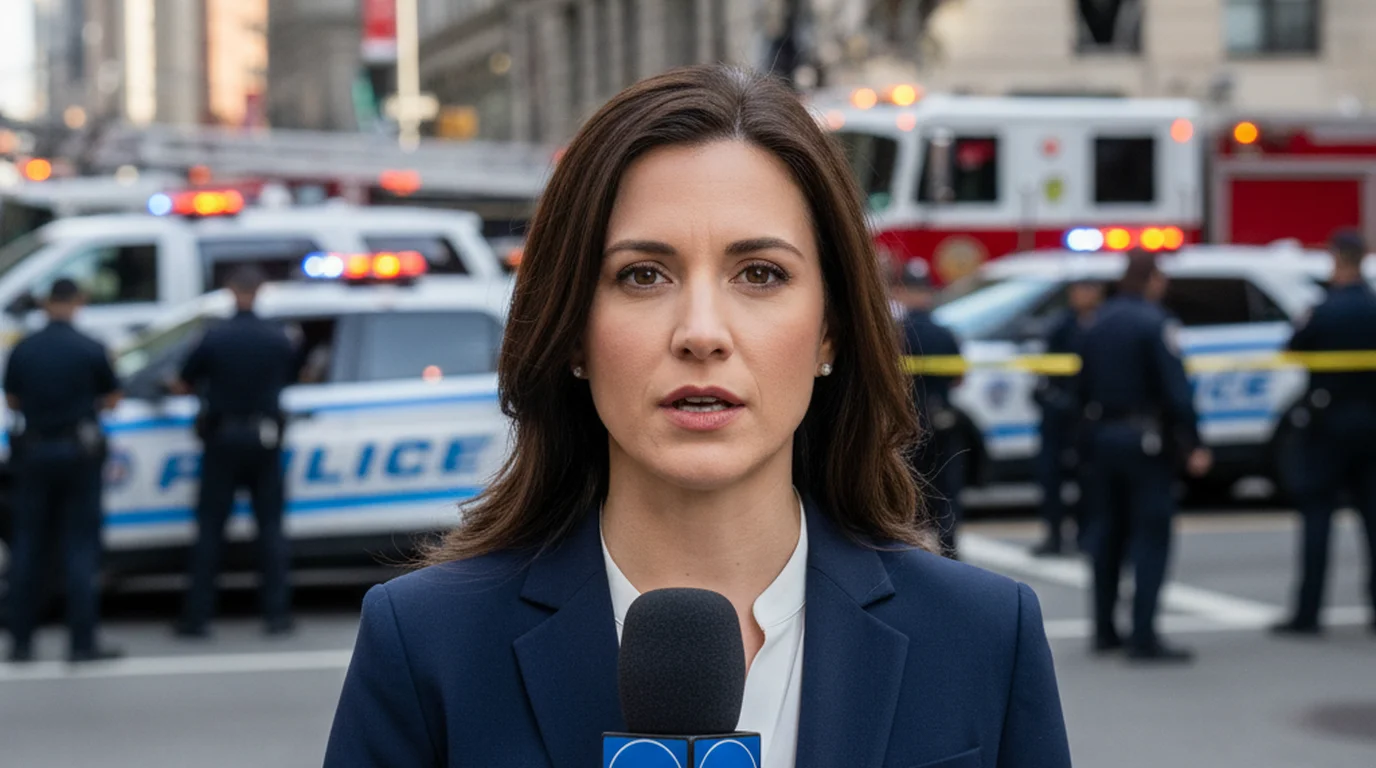
Studio anchors sit behind a camera with a teleprompter at eye level and a full script written minutes before air. Field reporters don't have that. When breaking news happens — a building fire, a press conference with no advance notice, an arrest that drops during a live broadcast — the reporter on the ground has to go live immediately, often with nothing more than a phone buzzing with wire alerts and 30 seconds to collect their thoughts. I've trained journalists at network affiliates and digital-first newsrooms, and the difference between a polished live shot and a shaky one comes down to four or five repeatable techniques.
To report breaking news without a teleprompter, experienced field reporters use a memorized story structure (5 W's + so what), brief bullet-point notes on a phone or notepad, real-time producer cues via an IFB earpiece, practiced ad-lib transitions, and — increasingly — a phone-based teleprompter app positioned below the camera for key facts like names, numbers, and official quotes.
Why Breaking News Happens Without a Teleprompter
Teleprompters require a script. Breaking news, by definition, happens before scripts are written. The studio anchor using a prompter is reading copy that a producer and writer prepared 10–15 minutes earlier. When a story breaks mid-broadcast — a verdict, a shooting, a press briefing that wasn't scheduled — the anchor transitions off-prompter instantly. For field reporters at the scene, there's rarely a teleprompter unit at all: the equipment is expensive, heavy, and not worth bringing to locations where the story could end before it arrives.
This isn't a gap or a failure in professional broadcast journalism — it's by design. The best field reporters are trained specifically to speak credibly without a script. But the techniques they use aren't exclusive to television professionals. Any live content creator, news-adjacent journalist, or corporate communications professional delivering unscripted video can apply the same framework.
Technique 1: Memorize the Structure, Not the Script
The biggest mistake in live unscripted delivery is trying to remember what to say. The professional approach is to remember the structure — then the words come naturally.
The 5 W's framework is the standard in broadcast journalism and for good reason: it's a complete story structure that works under pressure. In live breaking news, the five questions — who, what, where, when, why/how — give you a sequence that covers everything relevant and nothing that isn't. The "so what" addition is what separates a newscast from a police blotter: why does this matter to the person watching?
In my coaching sessions, I ask reporters to practice this structure on any news event they see in real life — a fender bender, a delayed flight, a crowd forming outside a business. The goal is to make the structure automatic so it fires under stress without conscious effort. After 50–100 practice runs, it does.
A live 60-second stand-up using this structure looks like: Who: [name or description] What: [the event in one sentence] Where: [specific location, not "here"] When: [time frame, ongoing vs. concluded] Why/How: [context, cause, background] So what: [what viewers should know or do about this].
Technique 2: Use Bullet Notes, Not Full Sentences
When you have 30–60 seconds before going live, don't write a script. Write bullets. Four to six words per point, maximum. The goal is a memory anchor — a word or phrase that triggers the full thought — not a text you read aloud.
Full sentences in your notes create two problems. First, you'll read them verbatim, and read speech always sounds different from spoken speech — more monotone, less direct eye contact. Second, if you lose your place in the text, you freeze. A bullet point is a prompt; you can recover from losing a prompt. You can't recover as gracefully from losing your place in a sentence mid-broadcast.
Standard bullet note format for a 90-second breaking news live shot: three or four lines total. First line: the core fact (what happened). Second line: one specific detail (who, the number, the location). Third line: context (why it matters, what comes next). Fourth line: the closing — what the viewer should know or expect. This is fast to write, fast to scan, and keeps your eyes up and on the camera rather than down on paper.
NBC News Academy, the training division of NBCUniversal, documents that professional broadcast reporters typically use a combination of IFB audio cues and 3–5 word bullet anchors for live breaking news delivery, rather than full scripts. Their published training materials note that "reading a full script in a live shot creates a visible shift in eye movement that viewers register as less authoritative than direct address." The same principle applies to content creators delivering live or semi-live scripted news-style video.
Technique 3: The IFB System — and What It Teaches Non-Journalists
IFB stands for interruptible foldback — the clear earpiece that anchors and field reporters wear. A producer in the control room feeds real-time audio: incoming information, script updates, cues to toss back to the studio, and corrections if the reporter states something wrong on air. The reporter hears this information while speaking and integrates it without missing a beat.
This dual-channel skill — listening while speaking — is trainable for non-journalists too. The applicable lesson isn't about the hardware but about the technique: experienced reporters process new information in real-time and update what they're saying without losing composure. The training method is practicing live delivery while someone calls out new facts or corrections. It's uncomfortable at first and essential at second.
For content creators who don't have a producer in their ear, the closest equivalent is practicing live delivery with partial information — starting a live shot when you only know 70% of the facts, then filling in as you go rather than waiting until you know everything. Breaking news rarely waits for a complete information set.
Technique 4: Practice Ad-Lib Transitions
Transitions are the hinges of any live delivery. In scripted work, transitions are written and read off the teleprompter. In unscripted work, you need a small inventory of reliable spoken transitions that work regardless of what comes before or after them.
Professional broadcast reporters develop a personal library of these — phrases that are neutral, informative, and keep the audience oriented while you're collecting your next thought. Common examples: "What we know right now is..." (resets to confirmed facts), "Officials have not yet confirmed..." (hedges accurately), "That's the picture from here — we'll continue to update as this develops." (clean exit), "To recap what we know so far..." (structured summary when additional information isn't immediately available).
The key is that these transitions aren't filler — they're honest statements about the status of the story. They keep the viewer informed while giving the reporter a breath and a mental reset. In coaching sessions, I have reporters build their own list of five to seven transitions and practice them until they're automatic under the same conditions as the 5 W's structure.
Technique 5: Use a Phone Teleprompter App for Key Facts
Not all breaking news goes on without any script at all. When there are specific facts that must be stated accurately — casualty numbers, names, addresses, official quotes — reading from a device is preferable to relying on memory. One transposed digit in a casualty count is a serious editorial error; one misquoted official statement can create legal and reputational exposure.
Field reporters increasingly use a phone or tablet with a teleprompter app for this specific purpose: not as a full script, but as a scrolling reference card for facts that can't afford a mistake. Positioned below or beside the camera with a large font and a slow scroll, it gives the reporter a glance reference without the locked-eye-contact look of reading a full document.
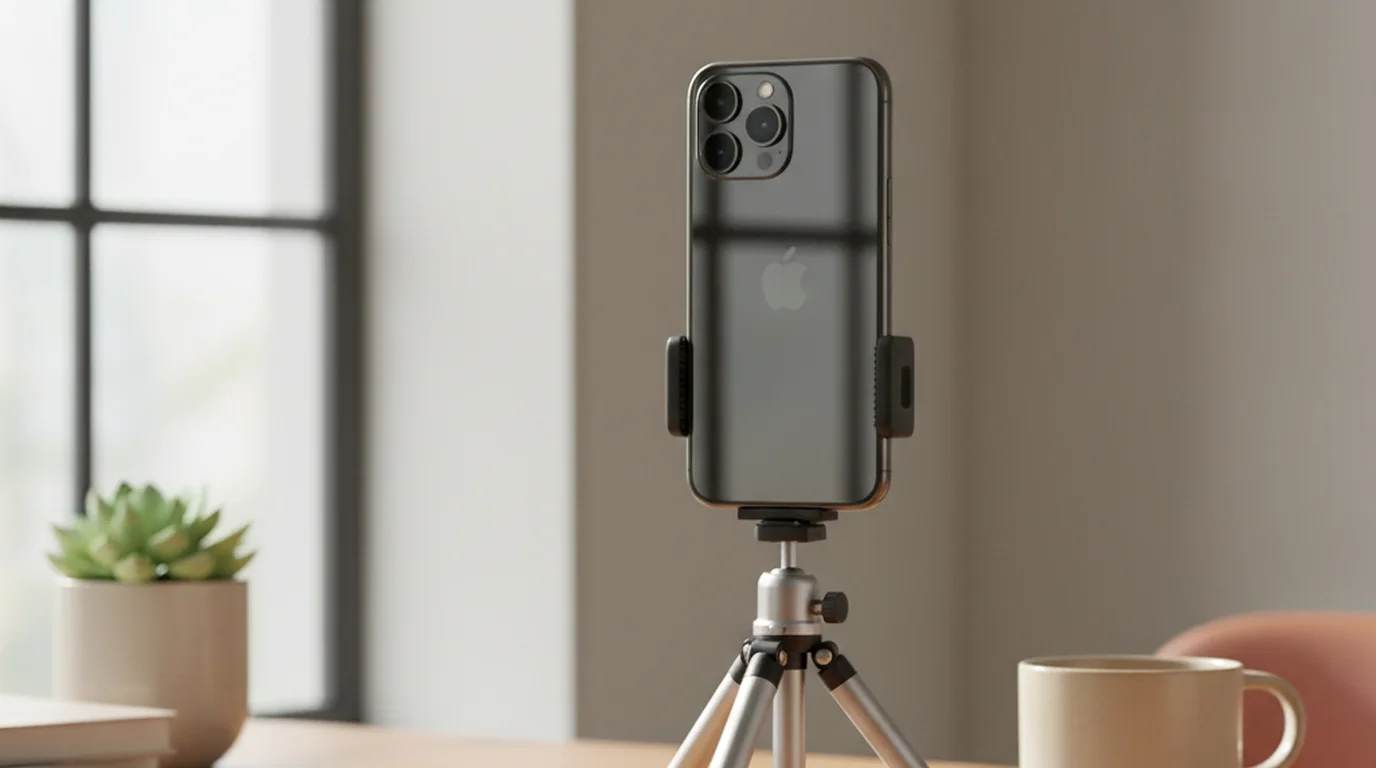
The setup requires practice to get right. The device should be as close to the camera lens as possible — ideally within 10–15 degrees horizontally — so that a glance down reads as thinking rather than reading. For phone cameras, a simple phone holder clipped to a selfie stick or tripod places the device directly below the lens. The news teleprompter techniques used by studio anchors apply here too — eye contact with the lens, not a fixed stare at the glass, and natural blink rate maintained throughout.
A 2024 Reuters Institute Digital News Report surveying journalists at 47 newsrooms across 15 countries found that 63% of field reporters at digital-first outlets now use a smartphone app of some kind during live video — including teleprompter apps, note-taking apps used as bullet references, and wire alert apps for real-time fact verification. The adoption rate was highest among solo video journalists (VJs) who cover breaking news without a crew, where the phone serves triple duty as camera, reference device, and communication tool.
Frequently Asked Questions
Do news reporters have teleprompters?
Studio anchors and scripted news programs almost always use teleprompters. Field reporters, however, typically don't — live shots from outside the studio rely on the reporter's memory, brief notes on a phone or notepad, and audio cues from a producer via an IFB earpiece. The same applies to breaking news situations where events develop faster than scripts can be written.
What are the 4 C's of journalism?
The 4 C's of journalism are Clarity (language the audience understands without translation), Conciseness (no wasted words), Credibility (attribution, accuracy, and sourcing), and Context (helping the audience understand why this story matters). Broadcast journalism adds a fifth: Conversational — copy must sound like spoken language because the audience hears it once.
How do anchors report breaking news live without a full script?
Anchors reporting breaking news live rely on a memorized story structure (the 5 W's), brief bullet-point notes visible off-camera, real-time audio information from a producer via IFB earpiece, and practiced ad-lib transitions developed through years of live delivery. Many also use a phone or tablet teleprompter app for key facts — exact numbers, names, and official statements.
Can I use my phone as a teleprompter for news reporting?
Yes. A teleprompter app on your phone or tablet acts as a scrolling notes system during live field reports. Position the device just below or beside the camera lens so your eye-line stays close to the lens while reading. Keep the font large, scroll slow, and limit content to 3–4 key facts per screen — names, numbers, direct quotes — rather than a full word-for-word script.
Your Phone, Your Teleprompter, Your Next Live Shot
Teleprompter-Scrolling Scripts turns your iPhone, iPad, or Mac into a professional scrolling reference — or a full teleprompter — for any live delivery. Free to use, no signup required.
Use Free Online Teleprompter Get the Free App
James HollowayJames Holloway coaches executives, founders, and professionals on scripted delivery and on-camera presence. His writing covers speech structure, words-per-minute pacing, and why most people's instincts about eye contact work against them.