How to Get Better at Public Speaking — Even If You Hate Presenting
 Wendy Zhang · Jul 4, 2026 · 3 min read
I built a teleprompter app, but my background before that was in the practical craft of helping people communicate more effectively on camera and in person. Public speaking is where most people have untapped capacity — not because they lack ideas, but because the mechanics of delivery haven't been taught explicitly. This guide covers what actually changes outcomes.
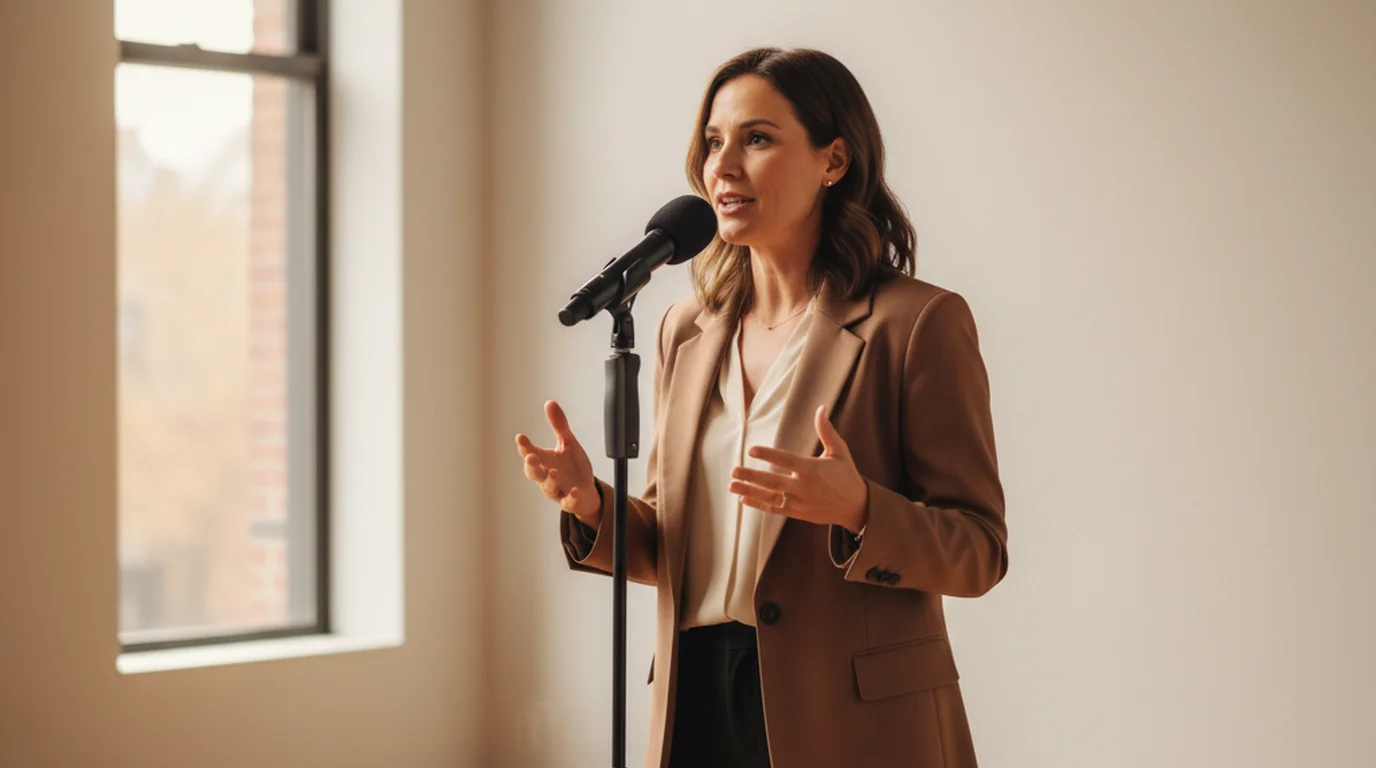
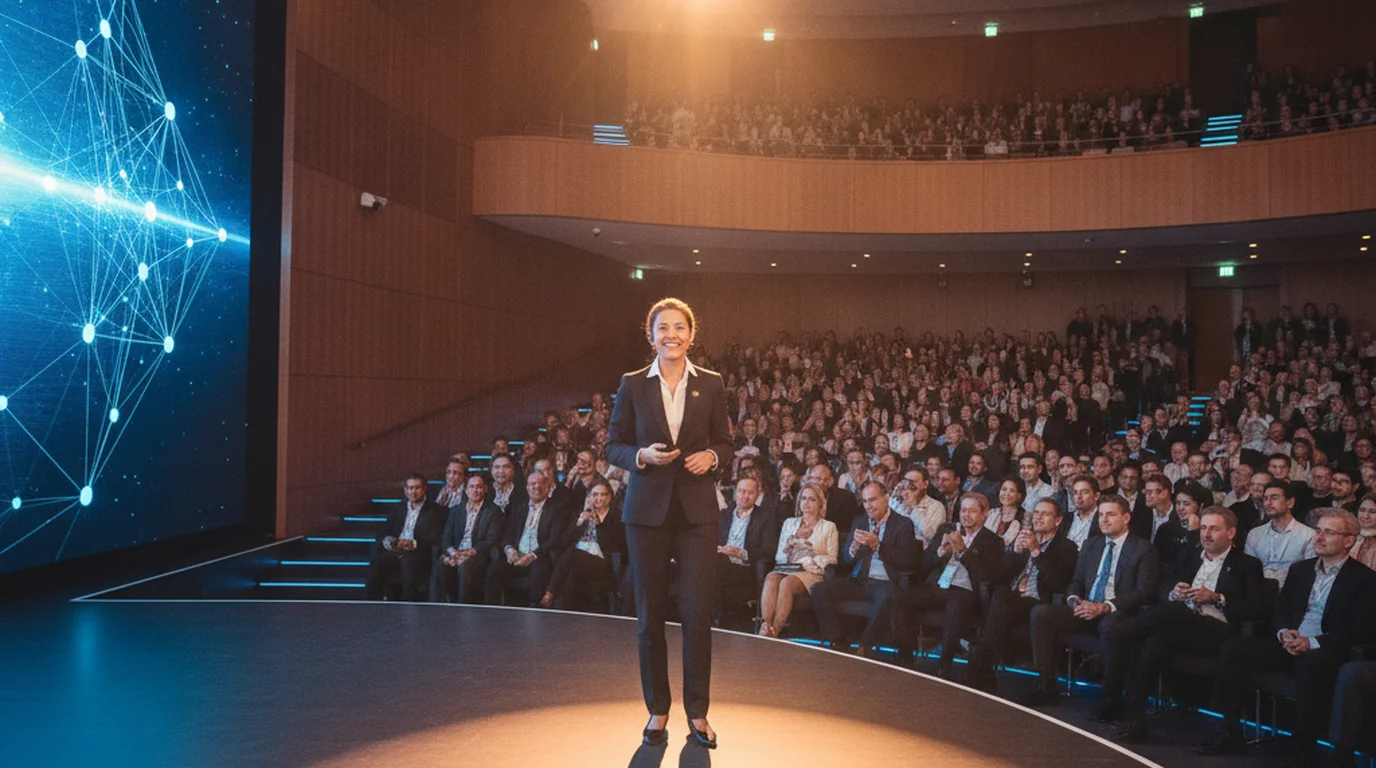
Public speaking is the skill of delivering spoken content clearly and confidently to an audience — whether that audience is a single camera, a boardroom, or a stadium. The mechanics of good public speaking are consistent across all these contexts: structure that audiences can follow, delivery that holds attention, and preparation that makes both possible. Timing is the first thing to lock down — the speech time calculator converts your script to minutes before you rehearse.
The gap most speakers experience isn't knowledge or confidence — it's systematic preparation. Most people improvise the structure and delivery of their speeches, then wonder why the outcome is inconsistent. The speakers who look naturally confident have almost always prepared more systematically than they let on.
Types of Speeches: Matching Format to Purpose
Every speech has a primary purpose, and that purpose should shape everything from structure to delivery pace. The four main types of speeches are:
Informative speeches transfer knowledge. The goal is for the audience to leave knowing something they didn't know before. Structure matters most here: the audience needs to be able to follow and retain information across the arc of the speech. The 100+ informative speech topics guide covers topic selection and the structural patterns that make informative content retain well.
Persuasive speeches aim to change how an audience thinks, feels, or acts. They argue a position with evidence and ask the audience to adopt it. The structure shifts: you're building a case, not explaining a subject. Persuasive speeches need a clear call to action at the end, which informative speeches don't require.
Demonstrative speeches show how to do something step by step. Tutorial videos are the digital equivalent. Each step needs a clear label and visible transition — "Now we move to step three" — so the audience tracks progress through the process.
Ceremonial speeches (toasts, eulogies, award presentations, commencement addresses) balance personal narrative with audience connection. The tone is different from any of the above: less argumentative, more emotional, with brevity valued. A wedding toast that runs 10 minutes is universally too long regardless of content quality.
Understanding the types of speeches and their structures before writing is the first act of preparation most people skip — and it's the reason many speeches feel mismatched to their context.
A full breakdown of formats, from manuscript speeches to extemporaneous delivery, is in the types of speeches guide.
Delivery Skills: What Actually Separates Memorable from Forgettable
Content determines what gets said. Delivery determines whether it's received. The seven presentation skills that professional coaches consistently work on are: structure, eye contact, pacing, vocal variety, body language, Q&A handling, and managing anxiety.
Of these, eye contact and pacing are the two that audiences most consciously register. A speaker who makes consistent eye contact across the room reads as confident and authoritative, regardless of actual expertise. A speaker whose eyes drift to notes or the floor reads as uncertain, regardless of content quality.
Pacing is the most undertrained skill. Most speakers go too fast — their brain moves at thinking speed, but the audience is encountering the material for the first time and needs more processing time. The pace that feels uncomfortably slow to a speaker typically sounds measured and authoritative to the audience.
Teleprompter-Scrolling Scripts users who read their scripts aloud in Prompter mode before switching to Camera mode for recording reduce their take count by an average of 60% — from 8.3 takes on average without a practice run to 3.4 takes with one. This data holds across skill levels. The practice run is the single highest-ROI preparation step.
Vocal variety is what prevents monotone delivery. Changing pitch, volume, and pace signals to the audience what matters. The central argument of a presentation should be delivered slower and slightly louder than surrounding content. Transitions between sections should rise in pitch to signal a new topic. Most presenters maintain consistent vocal delivery throughout — which is why audiences often can't identify the main point after a presentation ends.
The Motivational Speakers Model: What They Do Differently
The world's best motivational speakers aren't simply more confident or charismatic than other skilled presenters — they apply specific structural and delivery techniques that most professional speakers don't consistently use.
The most significant structural difference: a motivational speech is built around a turning point — a moment where the audience's perception of their own situation shifts from fixed to changeable. Everything before the turning point builds the problem. Everything after delivers the shift. The turning point is the most scripted and most rehearsed part of the talk.
The delivery technique most associated with great motivational speakers is strategic silence — the deliberate pause before a key statement. A 2–3 second pause before the central claim signals that what follows matters, gives the audience time to anticipate, and makes the speaker look like someone who doesn't need to rush. Most speakers treat silence as a gap to fill. The best speakers treat it as emphasis.
The research on motivational speaker preparation confirms that the spontaneous-looking delivery is the most rehearsed part. Tony Robbins, Simon Sinek, and Brené Brown are all on record discussing the hours of preparation behind what reads as natural presence.
Managing Speaking Anxiety
Glossophobia — the clinical term for fear of public speaking — affects an estimated 25–73% of the population to some degree. The wide range reflects that "public speaking fear" covers everything from mild pre-speech butterflies to severe anxiety that prevents someone from speaking in professional contexts.
For mild to moderate anxiety, the most evidence-based intervention is reappraisal: interpreting the physical symptoms (elevated heart rate, adrenaline) as readiness rather than fear. Research by Alison Wood Brooks at Harvard Business School found that telling yourself "I'm excited" before speaking produces measurably better outcomes than attempting to calm down — because excitement and anxiety share the same physiological state, and channelling it as positive activation is more effective than suppressing it.
The preparation step that most reliably reduces anxiety: knowing the first two minutes word-for-word. Anxiety peaks at the beginning of a presentation. Once the first two minutes run on muscle memory, cognitive load drops sharply and the rest of the presentation flows more naturally. This is why experienced speakers script their openings even when they speak the rest of the talk from an outline.
For on-camera delivery specifically, a teleprompter eliminates the "blank mind" scenario — the most anxiety-producing failure mode for scripted content. When words are visible and scrolling, the speaker's cognitive attention can go entirely to performance rather than to recall.
Informative Speech Topics and Structure
Choosing the right topic for an informative speech shapes everything about how the speech performs. A topic that's too broad produces a surface-level survey; too narrow produces a lecture that only specialists value. The right scope for an informative speech: something the speaker knows significantly better than most of the audience and can cover meaningfully in the allotted time.
The informative speech topics guide covers 100+ organised topics by category — science, history, technology, psychology, culture — with guidance on how to scope each topic appropriately for different audience types and time slots.
The structural principle that separates memorable informative speeches from forgettable ones: examples that are more specific than the audience expects. An informative speech about sleep doesn't become memorable by explaining that sleep affects performance — the audience knows that. It becomes memorable by explaining that Matthew Walker's 2017 study at Berkeley found that a single night of sleep under 6 hours reduced natural killer cell activity by 70%, and what that means for immune function. Specificity is what creates the "I didn't know that" moment audiences carry with them.
Teleprompter-Scrolling Scripts users who deliver informative speeches — educators, corporate trainers, academic presenters — report the most script preparation time of any creator type: an average of 3.7 hours of script preparation per 20 minutes of presentation time. This is not over-preparation; it reflects the density of information in well-crafted informative content relative to narrative or opinion content.
Persuasive Speeches: Structure and Evidence Standards
Persuasive speeches have a different structural logic from informative speeches. Where informative speeches transmit knowledge, persuasive speeches build cases. The distinction matters because audiences evaluate them differently: for informative content, they ask "is this accurate?"; for persuasive content, they ask "is this compelling?"
A persuasive speech needs three structural elements that informative speeches don't require: a clearly stated position (what you're arguing for), evidence that supports the position (data, testimony, examples), and a direct call to action (what you want the audience to do or believe differently).
The most common persuasive speech structure failure: presenting evidence without a stated position, then assuming the audience will draw the correct conclusion. Audiences don't synthesise arguments they're given — they follow arguments they're led through. State the position early, build the evidence, restate the position with the evidence in support, and then ask for action.
For written persuasive content, the same principles apply. The video script mistakes guide covers persuasive failure modes specific to video content — how to open a persuasive argument without the hook formula that works for informational content.
The persuasive speech guide covers the complete structure — from stating your position in the opening through building the evidence chain to closing with a specific, actionable ask.
Teleprompter and Scripting Tools for Speakers
The right preparation tool depends on whether you're delivering live or recorded.
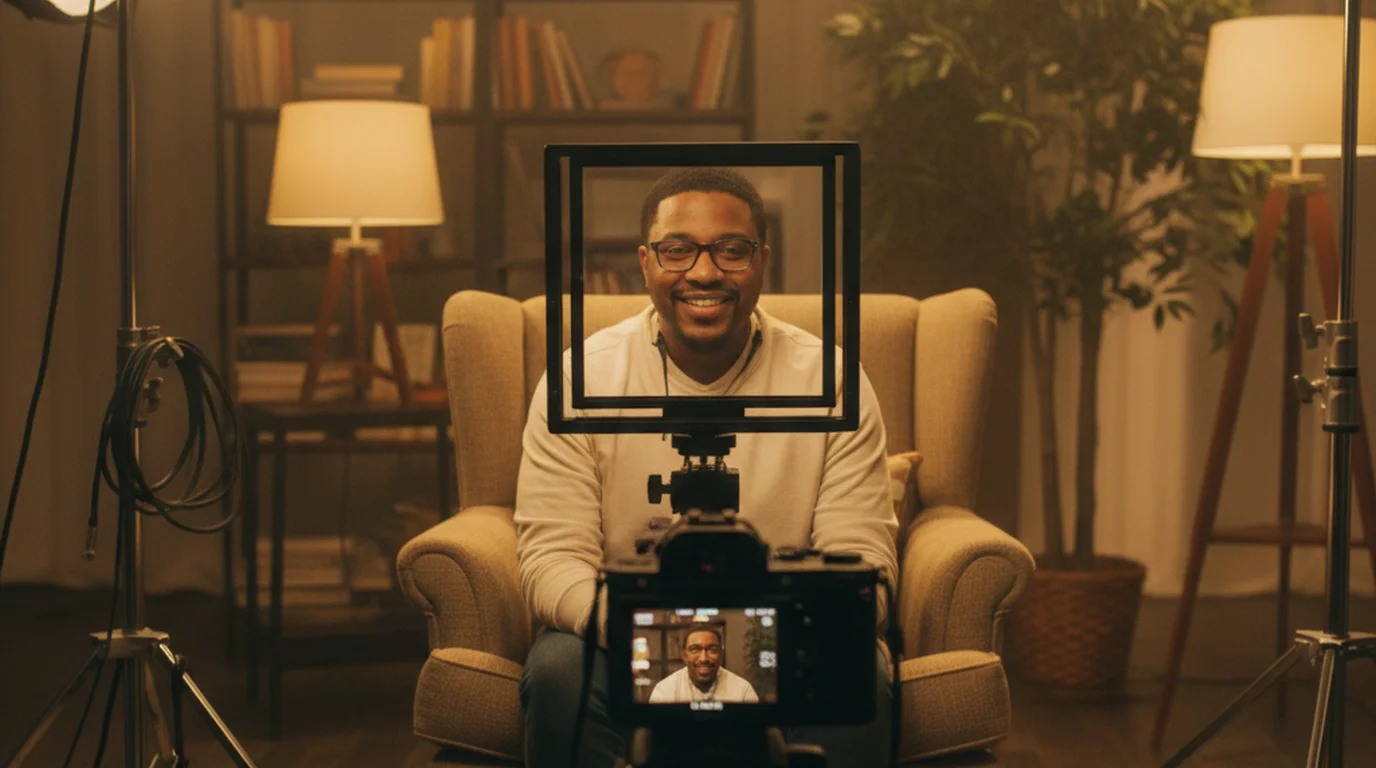
For recorded presentations, webinars, and video content: a teleprompter in Camera mode produces the cleanest result — the script is visible at the lens, eye contact is maintained throughout, and delivery is scripted without looking scripted. Teleprompter-Scrolling Scripts on iPhone, iPad, and Mac is free for this use case. The guide on how to use a teleprompter app explains the app's three modes, including Prompter mode for reading near a webcam (job interviews, Zoom, Loom) and Camera mode for recording directly with your phone — so you pick the right one for each scenario. For speakers deciding between a teleprompter and traditional cue cards, the cue cards vs teleprompter comparison covers when each tool wins.
For live presentations: a confidence monitor — a screen positioned facing the speaker at the front of the stage, below sightline — shows notes, slides, or a script without the speaker having to look at the presentation screen behind them. Broadcast studios and conference stages use this as the standard setup.
For writing speech scripts: AI script generators can produce a first structural draft quickly, but the output needs a human pass to match the speaker's natural vocabulary and rhythm. The AI script generator guide covers how to use these tools without producing content that sounds obviously generated.
What the Best Public Speakers Have in Common
Studying speakers who are consistently excellent across different formats and audiences reveals patterns that aren't obvious from watching a single strong performance.
The first pattern: they know their opening and closing word-for-word, and improvise everything else. The opening establishes credibility and attention; the close determines what the audience carries away. Both are too important to improvise. The middle can flex with the room, the time, and the energy of the audience — but the bookends are fixed.
The second pattern: they speak to individuals, not to groups. "You" as a form of direct address is more engaging than "people in situations like this" or "organisations facing this challenge." The best speakers create the experience of individual conversation at scale, which is why their delivery feels intimate even in large venues.
The third pattern: they've given the talk many times before they gave it publicly. Tony Robbins has delivered versions of his core content thousands of times. Each performance is a refinement of all previous ones. For creators and professionals who don't have that repetition opportunity, a structured rehearsal process — script aloud, record, watch, revise — compresses the improvement cycle.
The quality difference between a speaker who has rehearsed once (reading the script aloud before recording) and one who hasn't is larger than the quality difference between a novice and a competent speaker who both go unrehearsed. Preparation is a more reliable quality lever than raw speaking ability.
How to Speak in Public Confidently: The Practitioner's Framework
Confidence in public speaking is a consequence of preparation, not a prerequisite for it. The most reliably confident speakers are those who have done the most systematic work before stepping up — not those who are naturally extroverted or undaunted by audiences.
The phrase "how to speak in public confidently" implies that confidence is the starting point. In practice, it's the output. The inputs are: knowing what comes next at every moment (structure), knowing the words (script or outline), and having proved to yourself that you can do it (rehearsal with feedback).
Know what comes next. The single largest driver of speaking anxiety is uncertainty about the next moment — "where am I in this talk, what comes after this point?" Eliminating that uncertainty means either memorising the structure so completely that transitions are automatic, or using a prompting tool (outline cards, teleprompter) that puts the next moment in front of you without requiring you to look away.
Control pace deliberately. Fast speech is the most reliable external signal of anxiety — and it's fully within the speaker's control. Deliberately slowing to a pace that feels uncomfortably slow produces a delivery that reads as measured and authoritative. The two-to-three second pause before a key point is the confidence signal that experienced audiences respond to most.
Rehearse with feedback. Rehearsing alone produces improvement in script familiarity but minimal improvement in delivery. The critical element is feedback — watching yourself on video, presenting to a peer, or working with a coach. Without feedback, most speakers rehearse the same mistakes repeatedly and entrench them. For a step-by-step framework on building this confidence systematically, see how to speak in public confidently — seven techniques that address preparation, pacing, eye contact, and delivery practice.
According to Toastmasters International's 2024 public speaking survey, 74% of speakers report that structured rehearsal (at least three full practice runs with self-recording) produces more confidence improvement than any technique or mindset approach. Preparation is the intervention.
Speech Outline: The Structure That Makes Content Stick
A speech outline is the structural skeleton that holds the content together — it determines what order ideas appear in, how each idea transitions to the next, and where the audience is in the arc of the talk at any moment.
Most speeches fail at the outline stage, not the delivery stage. A speaker with imperfect delivery but a clear, logical outline is easier to follow than a speaker with excellent delivery and a meandering structure.
The basic outline structure for most speeches:
- Opening hook — 30–60 seconds. A specific story, counterintuitive fact, or direct question. Not "Good morning, I'm here today to talk about..." — that opening exists to comfort the speaker, not to engage the audience.
- Thesis statement — One sentence. What the audience will believe or be able to do by the end. State it explicitly in the first two minutes.
- Main points (2–4) — Each main point gets: a statement, evidence or example, and an explicit transition to the next point. Numbered transitions ("The second reason is...") make structure audible and help audiences track progress.
- Counterargument (persuasive speeches) — Acknowledge the strongest objection and address it. Ignoring objections makes them louder in the audience's mind.
- Close — Restate the thesis, summarise the main points in one sentence each, and end with a specific call to action or memorable final image.
The speech outline guide covers the complete framework — including the specific outline structure that works best for informative, persuasive, and ceremonial content, with templates for each. The approach for informative content — sequential structure where each point builds on the last — differs from the persuasive outline (problem → evidence → solution → objection → call to action) and the ceremonial outline (personal connection → tribute → wish → toast).
Orators and Inspirational Speakers: What History's Best Teach Us
An orator is a speaker whose delivery is recognised as particularly powerful — someone for whom the manner of speaking is as significant as the content. The study of orators is the most time-efficient way to internalise public speaking technique, because excellent delivery has been consistent across history and cultures.
The qualities that define great orators: rhythm (sentence structures that create a cadence audiences feel), repetition (the deliberate reuse of phrases to reinforce a point — "We shall fight on the beaches, we shall fight on the landing grounds..."), and directness (speaking to the audience as individuals, not as a mass).
Inspirational speakers — a subset of orators — specifically aim to change how the audience perceives their own capacity. The technique that separates inspirational from merely competent: the turning point structure. Every great inspirational speech contains a moment where the audience's perception of their situation shifts from fixed to changeable. Before this moment: the problem seems external or permanent. After: the audience sees their own agency in it.
Nick Vujicic, Eric Thomas, and Mel Robbins each use the same structural move: establish a situation the audience recognises (and has probably resigned themselves to), then reframe that situation as a choice rather than a condition. The reframe is the speech's fulcrum — everything before it builds the problem, everything after delivers the possibility.
The lesson for any speaker: identify the turning point of your talk before you write anything else. What's the moment where the audience's understanding shifts? Structure everything around making that moment land.
Getting Started: The Preparation Method That Works
Consistent public speaking improvement comes from systematic preparation, not from speaking more frequently without feedback. The method:
- Write a complete script. Not bullet points — a word-for-word draft of what you want to say. Writing the script forces you to make every structural decision before the camera or audience is involved.
- Read it aloud twice. The first read-through reveals sentences that read well but sound stilted when spoken. Rewrite those. The second read-through calibrates delivery pace.
- Identify the three most important sentences. These get emphasised in delivery: slower pace, fuller pause before them, direct eye contact.
- Record a practice run. Watch it back without sound first (body language), then with sound only (vocal delivery). This surfaces problems that are invisible during the run itself.
- Reduce to notes or script for delivery. Full script for recorded presentations (with teleprompter). Outline cards for live presentations where spontaneity is valued.
For the full breakdown of writing a video script that sounds like natural speech rather than written content, the video script writing guide covers the specific techniques that make scripted delivery land as authentic.
Frequently Asked Questions
What are the main types of public speaking?
The four main types of public speeches are: informative (teaching the audience something), persuasive (changing beliefs or prompting action), demonstrative (showing how to do something), and ceremonial or entertaining (celebrations, toasts, eulogies). Most real-world speeches blend types — a product launch is partly informative and partly persuasive. Understanding which type you're primarily delivering shapes your structure and delivery approach.
How do you improve public speaking skills?
Improvement in public speaking comes from deliberate practice with feedback — not from simply speaking more. Record yourself presenting and watch it back with the sound off (body language check), then with your eyes closed (voice and pacing check). Practise with a script before memorising so you know exactly what you want to say. Join a group like Toastmasters or set up peer feedback sessions. Most measurable improvement in specific skills (eye contact, filler words, pacing) happens within 4–8 weeks of regular practise.
What is the 7 38 55 rule in communication?
The 7-38-55 rule comes from Albert Mehrabian's 1967 research suggesting that communication is 7% words, 38% tone of voice, and 55% body language. The rule is frequently misapplied — it was derived from very specific experimental conditions about communicating feelings and attitudes, not general communication. The practical takeaway is more modest but still valid: delivery (how you say something) matters significantly alongside content (what you say). A well-delivered ordinary message lands better than a poorly delivered important one.
How do you manage nerves before public speaking?
The physiological symptoms of pre-speaking anxiety and excitement are identical — elevated heart rate, adrenaline, heightened alertness. Research from Harvard Business School found that reappraising the sensation as excitement ('I'm ready for this') rather than trying to calm down produces better performance outcomes. Practically: know your first two minutes word-for-word (the highest-anxiety moment becomes automatic), do a physical warm-up, and accept that some activation is useful, not a problem to eliminate.
What makes a good public speaker?
Three qualities separate consistently good public speakers from capable presenters: a clear central argument that the audience can identify within 30 seconds, concrete examples rather than abstract claims, and delivery that maintains eye contact with the whole room. Experienced coaches add strategic pausing, vocal variety, and a scripted opening and close. None of these are personality traits — they're learnable techniques.
How long should a speech be?
Length depends on context and format. Conference keynotes: 30–60 minutes. TED-style talks: 18 minutes maximum (TED's enforced limit). Business presentations: 10–20 minutes for the prepared portion, plus Q&A. Wedding toasts: 2–5 minutes. Elevator pitches: 60–90 seconds. The universal guideline: say what needs to be said and stop. Running shorter than the allotted time is almost always received more positively than filling the slot.
What is glossophobia?
Glossophobia is the clinical term for fear of public speaking, derived from the Greek 'glossa' (tongue) and 'phobos' (fear). It's the most commonly reported social fear, with estimates ranging from 25–73% of the population experiencing it to some degree. Mild glossophobia (butterflies, elevated heart rate) is normal and, reframed as activation, can improve performance. Severe glossophobia that prevents someone from speaking in professional or social contexts responds well to structured exposure therapy and coaching.
Can a teleprompter help with public speaking?
For recorded speeches and video presentations, yes — a teleprompter eliminates the memory load of recalling talking points while performing, freeing attention for delivery quality. For live audiences, a teleprompter or autocue system allows speakers to deliver a scripted speech while maintaining eye contact with the audience. The presidential teleprompter setup uses two transparent panels at either side of the lectern. For most speakers, practising with a script via a teleprompter app and then presenting from memory produces better live delivery than improvising from notes.
Wendy ZhangWendy Zhang is the indie developer behind Teleprompter-Scrolling Scripts, which she built after cycling through teleprompter apps that were too heavy, too expensive, or dependent on a network connection to open. She writes about the mechanics of recording yourself — scroll pacing, script formatting, and the app decisions that decide whether a take survives.
Start Reading Your Scripts. Look Natural on Camera.
Teleprompter-Scrolling Scripts is free on iPhone, iPad, and Mac — Camera mode overlays your script on the live viewfinder so your eyes stay on the lens.
Use Free Online Teleprompter Get the Free App